Tohoku Researchers Develop Simple Microscope Method for Rock Analysis
Researchers at Tohoku University published a new optical workflow on November 9, 2026, that uses standard microscopes and software to measure mineral grain properties in rocks.
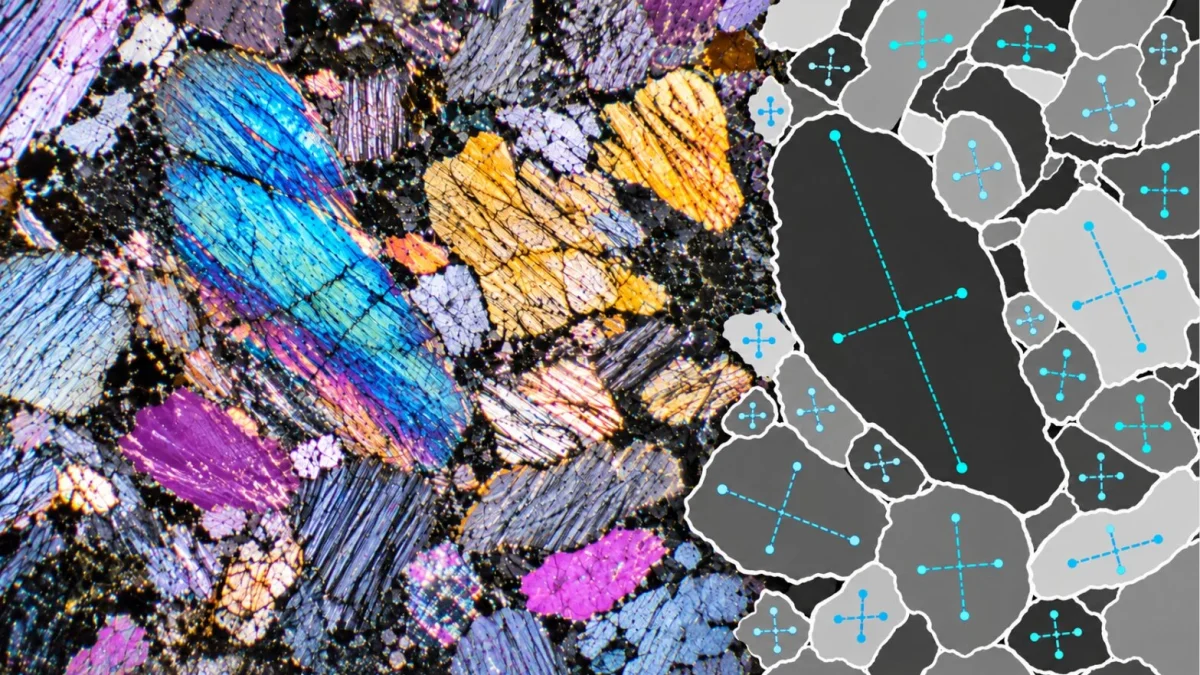
New Software Combines Optical Data
Scientists at Tohoku University combined a conventional polarizing microscope with new software named NicoNavi to analyze rock samples. The system records video of thin rock slices rotating through a full 360-degree turn under polarized light. As the sample spins, mineral grains change brightness and color based on their specific crystallographic orientations. This process allows the team to identify individual grains and map their microstructures without specialized electron equipment.
Validation Against Electron Microscopy
Dr. Tan Furukawa and Professor Tatsuki Tsujimori tested the method against established electron backscatter diffraction techniques for accuracy. They used rock sections with thicknesses between 20 and 35 micrometers to compare the results from both systems. The optical approach produced broadly consistent data regarding grain boundaries, statistics, and c-axis orientation distributions compared to the electron method. Analysis of quartz c-axis orientations can be completed in approximately ten minutes with slight sample tilting.
Broader Access for Education
The team hopes this workflow makes quantitative analysis available in laboratories that already possess standard optical equipment. Dr. Furukawa stated that combining simple measurements with automated image analysis helps researchers collect large amounts of structural data. This method could also provide university students with new opportunities to investigate microscopic structures recording Earth's geological history. The findings were published in the Journal of Petrology on November 9, 2026.
Reported by one outlet
Only one outlet has published this. Nothing here has been checked against a second report, so read it as that outlet's account and follow the link below for the original.
Reported by
1 independent outlet. Headline as published. Links open the original report.