Study finds polyethylene packaging often has lower environmental impact than alternatives
Researchers from the US and Austria published a life cycle assessment comparing polyethylene packaging to paper, glass, and metal options in the US and Europe.
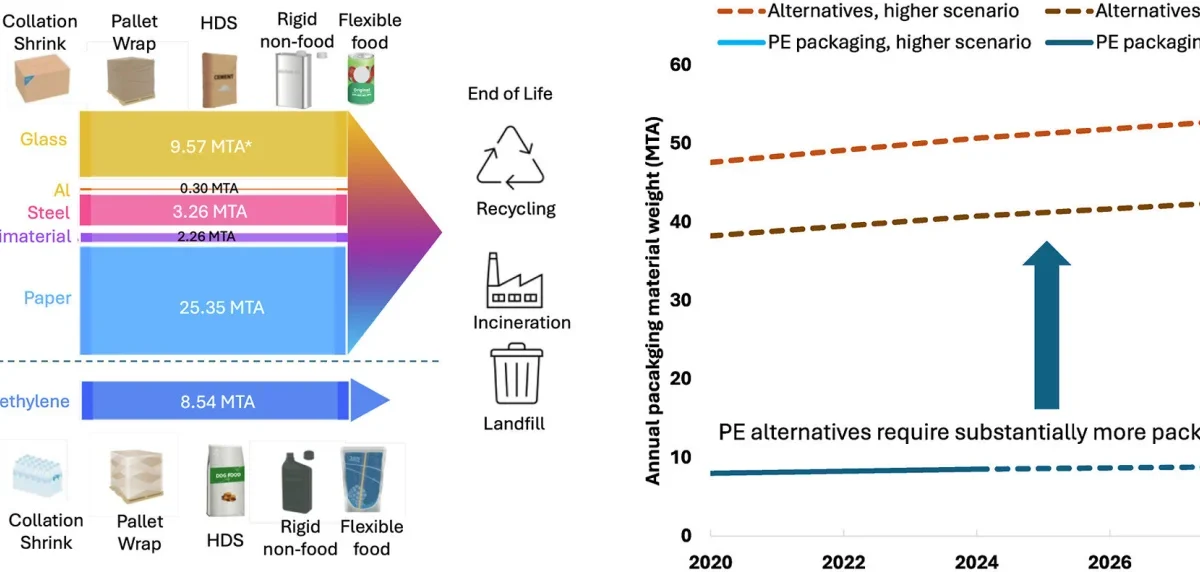
Polyethylene shows lower impacts
A new research study assessed five major polyethylene packaging applications across two continents. Single-use polyethylene packaging generally showed lower potential environmental impacts than paper, glass, or metal alternatives in most comparisons. In the US, polyethylene had lower global warming potential than alternatives in 84 percent of comparisons. Europe saw this occur in 68 percent of similar comparisons for the same indicators.
Recycling and reuse trade-offs
Both regions showed lower environmental impacts as the amount of post-consumer recycled material used increased. Potential impacts were not always reduced by higher recycling rates across every indicator since results depended on the specific material type. In Europe, increasing polyethylene pallet stretch wrap film recycling from 41 percent to 70 percent reduced global warming potential by up to 15 percent. That same increase increased eutrophication by up to 21 percent for that specific application.
Market growth projections
The analysis scaled comparisons to reflect expected market demand through 2030 and beyond. US demand for these applications is forecast to grow by about 30 percent from 2020 to 2030. During that time, conservative European demand modeling should increase by approximately 3 percent. The key to swapping polyethylene for alternative substances was material efficiency.
Reported by one outlet
Only one outlet has published this. Nothing here has been checked against a second report, so read it as that outlet's account and follow the link below for the original.
Reported by
1 independent outlet. Headline as published. Links open the original report.