Stellar collision theory explains Orion Nebula age paradox and gas shell timing
Astronomers propose that a merger between two stars in the Orion Nebula accounts for the apparent youth of planet-forming disks and the recent formation of a surrounding gas shell.
Massive star formed from binary merge
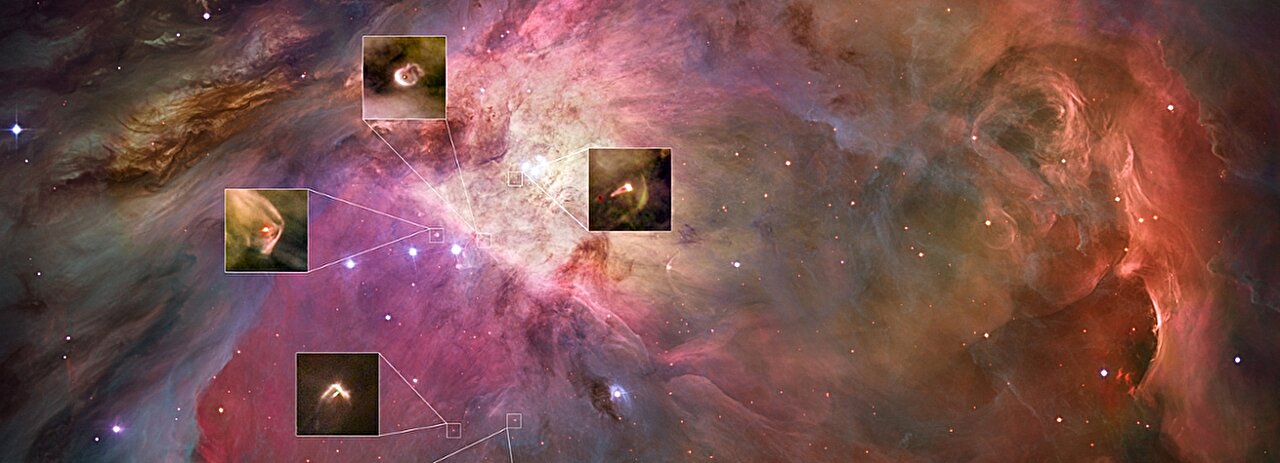
Researchers suggest the central star, designated 1 Ori C1, originated when two stars collided. This massive object now weighs approximately 33.5 times more than our sun. The merger event would have occurred roughly a few hundred thousand years ago.
Disks appear younger due to stripping
Radiation from the newly formed single star rapidly removes material from nearby gas and dust rings. This process gives the disks a tadpole shape while they vanish before their host stars reach one million years old. The central star also pushes surrounding gas outward at speeds reaching 13 kilometers per second.
Simulation supports new collision scenario
A team led by Maite Wilhelm from Leiden University ran computer models to test this hypothesis. Their simulations show how a binary system collapse could resolve the timing differences between stars and their environment. This approach offers a unified explanation for observations that previously seemed contradictory.
Reported by one outlet
Only one outlet has published this. Nothing here has been checked against a second report, so read it as that outlet's account and follow the link below for the original.
Reported by
1 independent outlet. Headline as published. Links open the original report.