Solar sails face drag at 75 percent light speed
Scientists from the Harbin Institute of Technology report that interstellar solar sails encounter resistance when reaching 75 percent of light speed.
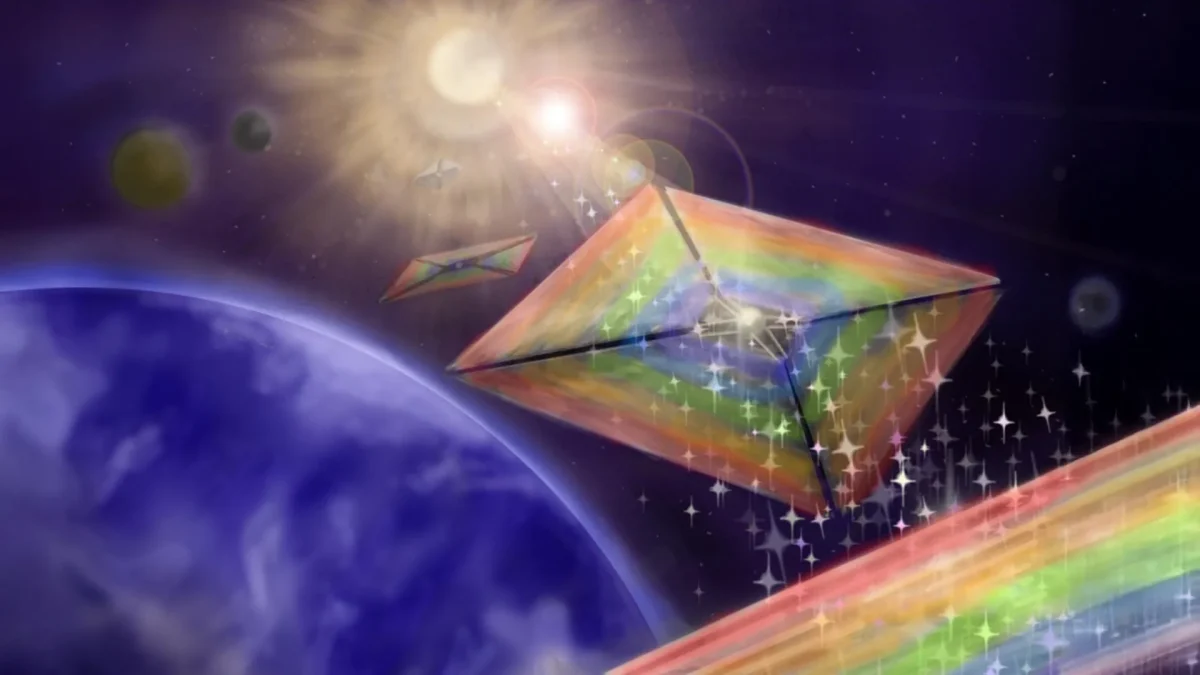
Light creates unexpected drag force
Researchers found that scattered light begins slowing down spacecraft at extreme velocities. This phenomenon occurs specifically once a vehicle hits 75 percent of the speed of light. Some photons acting as propellers start producing drag instead of pushing the craft forward. The study identifies this resistance as a major obstacle for future interstellar missions.
Study examines photon interactions
Chao Shen and Jiaze Li analyzed how photons transfer momentum to reflective surfaces. They looked at incident light, specular reflection, and diffuse scattering as distinct interaction types. Incident light provides the strongest contribution to the sail's motion in their breakdown. The team published these findings in a recent paper available on arXiv.
Relativistic speeds complicate physics
The situation becomes complicated once the sail reaches relativistic speeds where Einstein's theory matters. The spacecraft experiences an increasingly strong Doppler effect as it accelerates away from its laser source. This effect changes the frequency of light rather than the pitch of a sound. Such changes alter how light interacts with the moving reflective surface.
Reported by one outlet
Only one outlet has published this. Nothing here has been checked against a second report, so read it as that outlet's account and follow the link below for the original.
Reported by
1 independent outlet. Headline as published. Links open the original report.