Snapping Shrimp Lose Direction Without Protective Helmets After Blast Exposure
Researchers at the University of Tulsa found that bigclaw snapping shrimp without orbital hoods showed disorientation and took longer to reach shelter after being exposed to nearby blast waves.
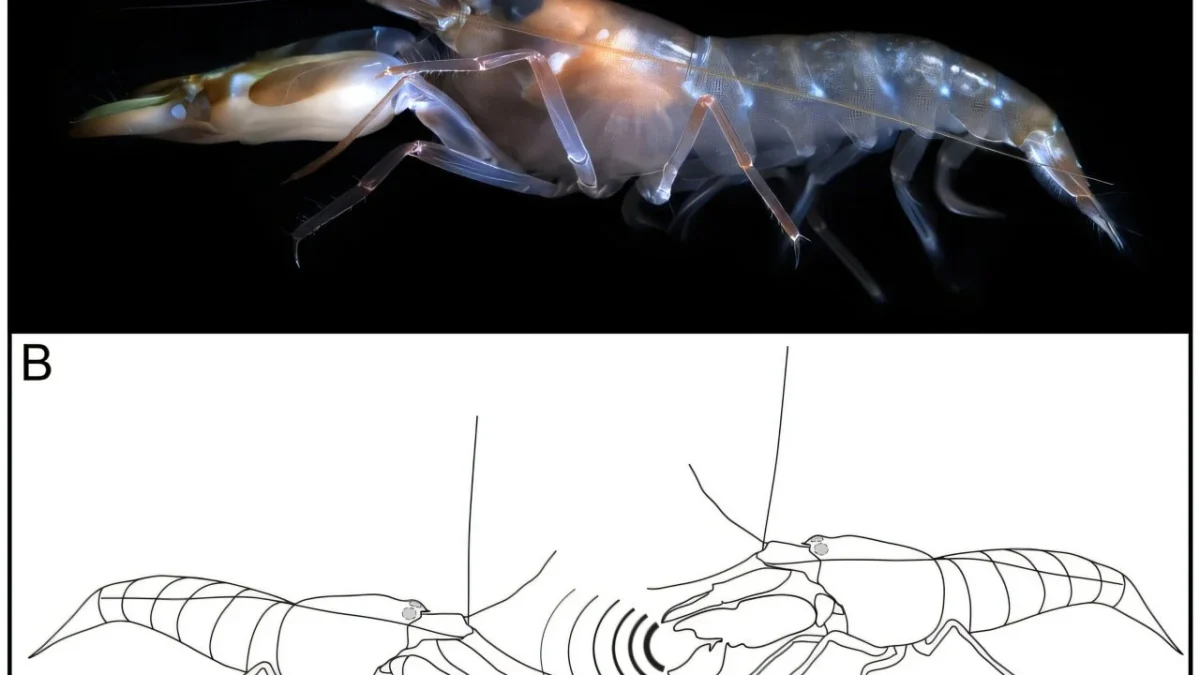
Unprotected Shrimp Wander Aimlessly After Blasts
A new analysis published in Scientific Reports details how removing the transparent orbital hood from bigclaw snapping shrimp affects their behavior. Tanner Mierow of the University of Tulsa and colleagues tracked movements in videos from an earlier experiment involving 120 Alpheus heterochaelis animals. The study split the group so half had hoods surgically removed while the other half kept them intact. Researchers exposed half of the unprotected shrimp to three snaps from a neighbor positioned one centimeter away from their heads. These unprotected, blast-exposed animals traveled along slower, longer, and more winding paths compared to all other groups in the tank.
Previous Work Showed Hoods Reduce Shock Strength
A 2022 study previously released showed that orbital hoods cut shock wave intensity to about half by the time they reached the shrimp brains. Energy seemed to depart with water that had been caught beneath the hood while the explosion occurred. Earlier research further showed that hoodless shrimp required more time to find refuge following an explosion. The current study focused on determining whether the delay was simply due to slow movement or actual navigation trouble. Unprotected shrimp exposed to blasts covered a median journey of about 53 centimeters while protected counterparts covered only 34 centimeters.
Behavioral Changes Suggest Nervous System Injury
Researchers explain that the mix of reduced velocity and circuitous routes reflects spatial confusion linked to blast damage affecting the nervous system. This finding suggests that movement patterns could serve as a useful way to assess consequences of blast exposure in living animals. The analysis measured behavioral changes rather than direct damage within brain tissue or specific neural structures. Researchers still lack a detailed understanding of the internal physical damage caused by these powerful underwater shock waves.
Reported by one outlet
Only one outlet has published this. Nothing here has been checked against a second report, so read it as that outlet's account and follow the link below for the original.
Reported by
1 independent outlet. Headline as published. Links open the original report.