Scientists use tree rings and ice cores to date Babylon’s fall
Researchers combined ancient wood samples with volcanic data to pinpoint the year Babylon fell around 1587 B.C.
New method dates ancient history
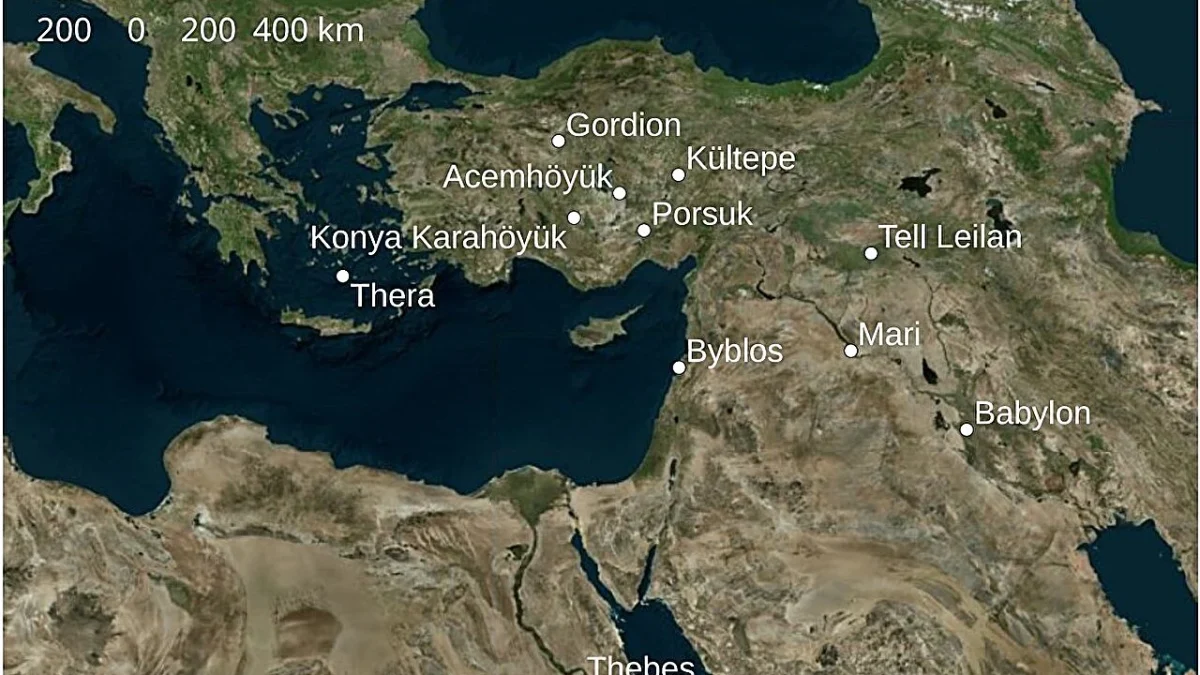
Researchers guided by Charlotte Pearson from the University of Arizona examined tree rings within timbers discovered in Turkey. They measured radioactive carbon levels to find exact ages for the wood. The researchers matched these patterns with trees of known age to create precise dates. This process linked physical evidence to written records from ancient Assyrian palaces.
Volcanic haze confirms timeline
The scientists also examined Babylonian records describing difficult observations of the planet Venus. They suspected volcanic haze blocked visibility during specific times in the past. Evidence from polar ice cores showed a massive eruption at Aniakchak volcano in Alaska between 1628 and 1627 B.C. This match helped select the correct historical timeline for Mesopotamia over competing theories.
Results published in journal
The findings appear in a paper within the journal Proceedings of the National Academy of Sciences. The study supports a middle-low chronology for dating events in ancient Mesopotamia. Researchers also dated two palaces to 1837-1836 B.C. and 1778 B.C. using this technique. Researchers identified arid weather spanning the years 1228 to 1188 B.C., which featured a drought occurring from 1194 to 1192 B.C.
Reported by one outlet
Only one outlet has published this. Nothing here has been checked against a second report, so read it as that outlet's account and follow the link below for the original.
Reported by
1 independent outlet. Headline as published. Links open the original report.