Scientists say de-extinction recreates traits not lineages
Researchers at Wheaton College in Massachusetts argue that genetic engineering cannot restore extinct species in a new opinion paper published in Biology Letters on November 11, 2026.
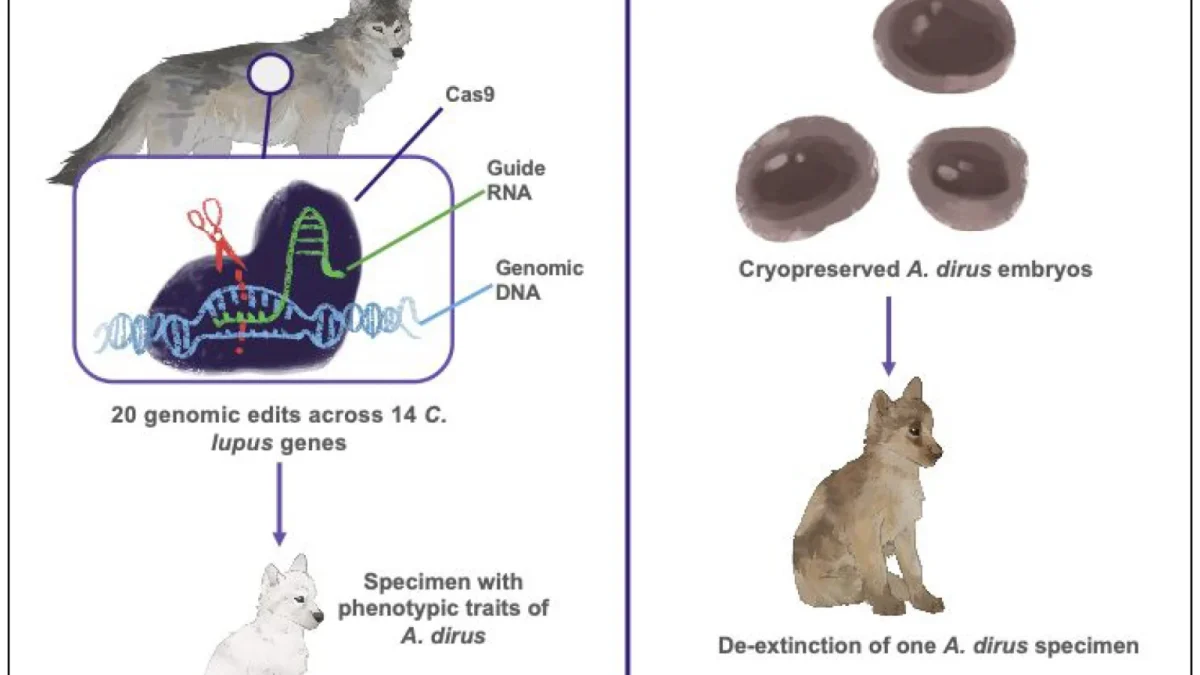
Colossal Biosciences modified gray wolf cells
Andrew Davinack and Charlotte K. According to Daniels from Wheaton College located in Massachusetts, genetic engineering fails to genuinely undo extinction due to multiple factors. They illustrate their case with the Dire Wolf Project, where biotechnology company Colossal Biosciences claimed to have brought an extinct predator back to life. The company genetically modified cells from living gray wolves by making 20 edits across 14 genes. The process subsequently employed the altered cells to generate cloned creatures exhibiting traits linked to the vanished predators.
Cloned animals remain engineered gray wolves
Davinack and Daniels state that the offspring remain genetically engineered gray wolves rather than extinct dire wolves being resurrected. Bringing back traits of a vanished creature fails to revive its evolutionary past or the genetic variety that once spanned its group. These creatures might serve as scientific or conservation analogs and ecological proxies, yet they do not represent extensions of extinct lineages.
Environment cannot be restored for species
The researchers further contend that recreating an extinct species' DNA does not allow for restoring its original habitat. This covers connections to other species and environmental factors that influenced its development. Admitting that creating cloned animals from stored cells or frozen embryos of an extinct species stands apart, as this approach maintains a direct biological connection to the original organism.
Technology could protect living species instead
Instead of attempting to revive vanished species, the scientists argue that emerging technologies aimed at de-extinction might fulfill a more practical function. These approaches should not be treated as conceptually equivalent because restoring lost genetic diversity might help protect those that are still alive. This strategy could potentially reduce the harmful effects of inbreeding within existing populations.
Reported by one outlet
Only one outlet has published this. Nothing here has been checked against a second report, so read it as that outlet's account and follow the link below for the original.
Reported by
1 independent outlet. Headline as published. Links open the original report.