Rice-sized chips wirelessly track heat in chemical reactions
Stanford researchers and Cornell engineers developed rice-sized chips that wirelessly transmit heat data from test tubes during chemical reactions.
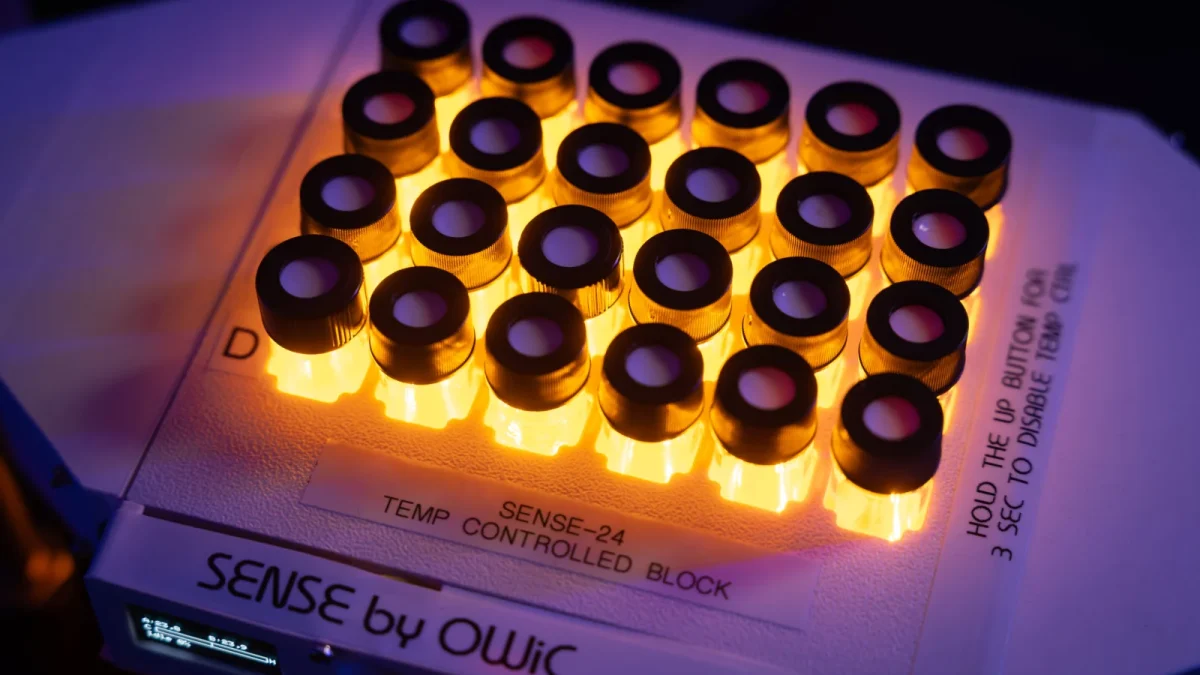
Real-time monitoring of reactions
A fleck-sized chip placed at the bottom of a test tube provides data for every second of a reaction. The advance published in Science promises to increase the speed of chemistry research including drug discovery. Song Lin called the chips cell phones for molecules that communicate progress and fix problems. These devices are smaller than a grain of rice and detect temperature inside tubes.
Data collection improvements
Previously researchers used intrusive sampling or waited until reactions finished to get single data points. Each fresh microelectronic chip transmits one data point to each test tube at intervals of half a second. A batch of 96 reactions yields nearly 700,000 data points after an hourlong reaction. This system offers a cost-effective nonintrusive way to get insights into evolving reactions.
Testing catalyst performance
To assess the utility of live data, doctoral candidates Sukwoo Lee and Evan Weingarten conducted experiments. The system detected problems with catalytic reactions when a substance stopped the reaction from working. Information from the chips showed whether a poison shut down the reaction in each tube. Researchers could often understand why the reaction stopped based on the relayed information.
Reported by one outlet
Only one outlet has published this. Nothing here has been checked against a second report, so read it as that outlet's account and follow the link below for the original.
Reported by
1 independent outlet. Headline as published. Links open the original report.