Review maps roadmap for functional fruit packaging strategies
A research team from the South China Botanical Garden published a new review in Comprehensive Reviews in Food Science and Food Safety outlining advanced packaging methods.
Current postharvest loss rates remain high
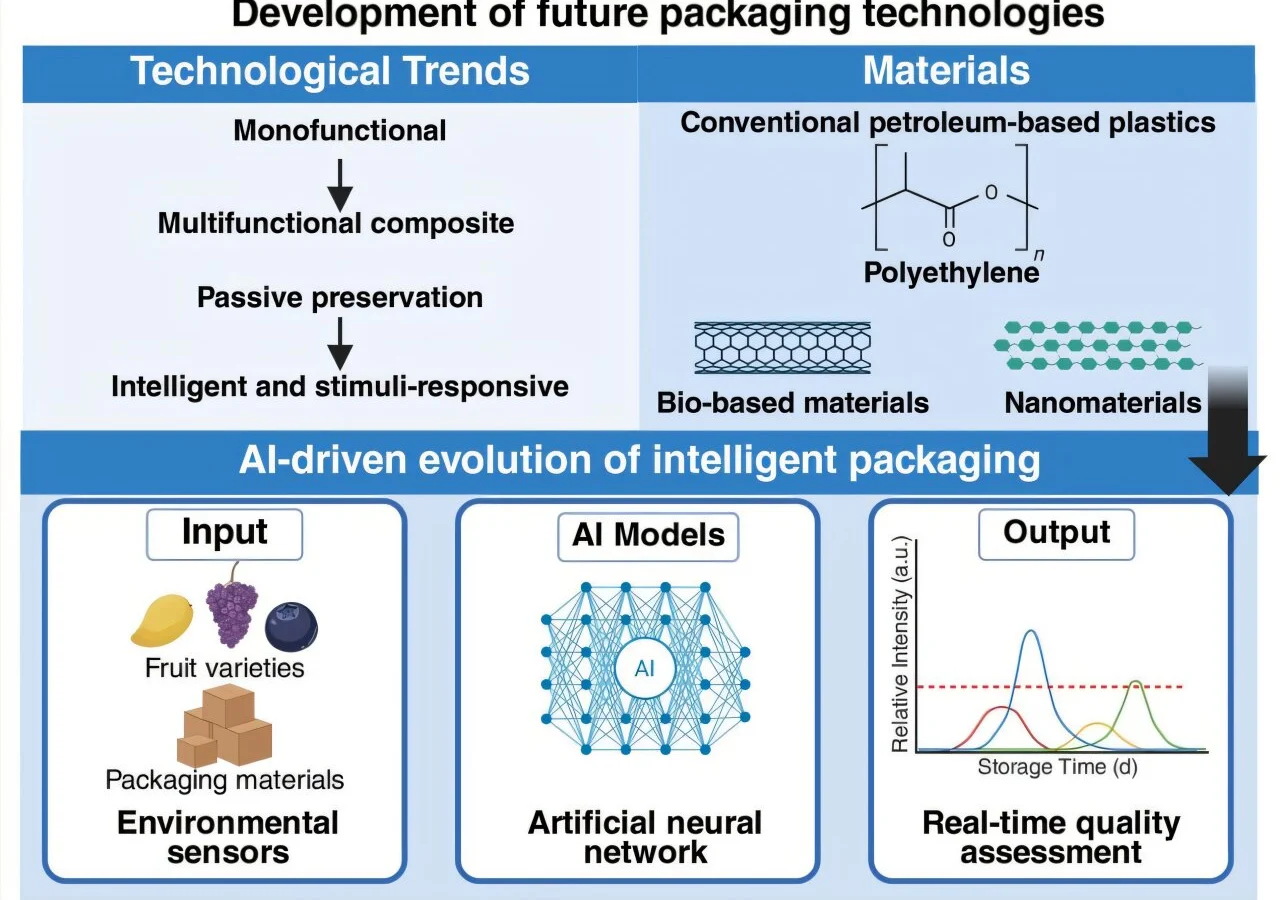
Freshly harvested fruit continues to respire vigorously and remains highly sensitive to ethylene gas. Consequently, about 25 percent of fruit is lost during the postharvest supply chain due to inadequate preservation or transport. Standard petroleum-derived plastic wraps function only as an unresponsive physical shield unable to adapt to shifting bodily conditions. Functional packaging instead modulates the in-package microenvironment and releases active agents to intervene in respiration and microbial growth.
Specific materials show distinct performance gains
After 18 days of storage, the chitosan nanocellulose coating limited grape weight loss to 15.5 percent when compared with a control group. A Pt/CeO₂-P catalyst achieved ethylene removal efficiency of over 99.9 percent and kept bananas firm for 14 days. Machine-learning-assisted sensor arrays determined fruit ripeness with 99.09 percent accuracy according to the study findings.
Industrial translation faces cost barriers
Stimulus-responsive metal-organic framework carriers are still confined to the laboratory or early prototype stage at present. Translation into practice is constrained by insufficient microstructural stability and safety assessments that lag behind current needs. Cellulose nanocrystals cost roughly 13 times as much as polypropylene which limits scalability for widespread adoption.
Reported by one outlet
Only one outlet has published this. Nothing here has been checked against a second report, so read it as that outlet's account and follow the link below for the original.
Reported by
1 independent outlet. Headline as published. Links open the original report.