Researchers suppress collisional loss in stable quantum gas molecules
Scientists from Radboud University and Columbia University have created an extremely stable quantum gas to study strongly interacting systems.
Creating artificial quantum matter
Researchers cooled molecular gases to nanokelvin temperatures near absolute zero. This process caused the molecules to form a Bose-Einstein condensate where many share the same quantum state. The resulting system acts as a controllable model for studying electrons in real materials.
Controlling molecular dipole moments
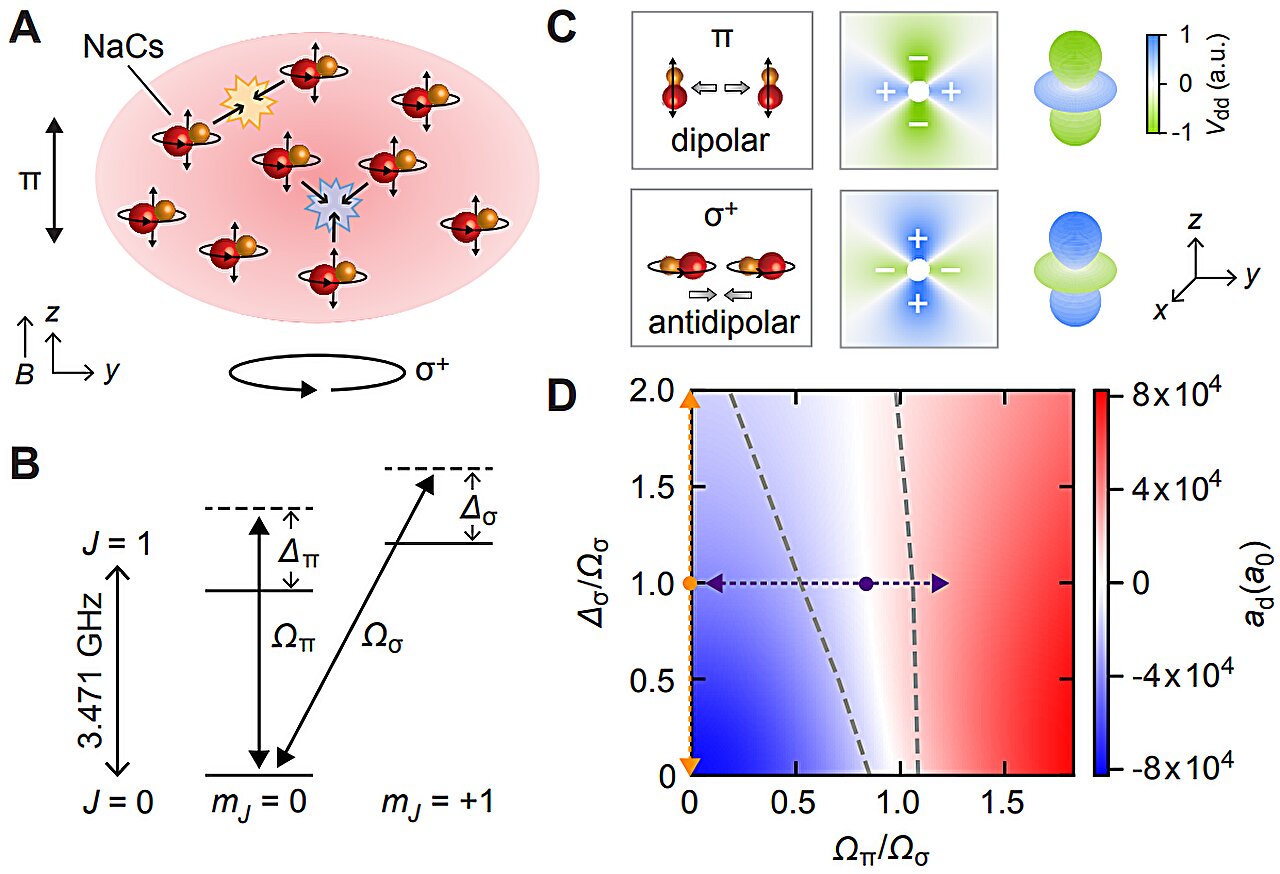
The team used microwaves to control the molecular dipole moments of the gas. This technique allowed them to suppress collisional loss by more than a factor of 10,000. Such stability prevents molecules from being lost during close encounters.
Reported by one outlet
Only one outlet has published this. Nothing here has been checked against a second report, so read it as that outlet's account and follow the link below for the original.
Reported by
1 independent outlet. Headline as published. Links open the original report.