Researchers Identify Key Features of High-Performance Molecular Cage Catalysts
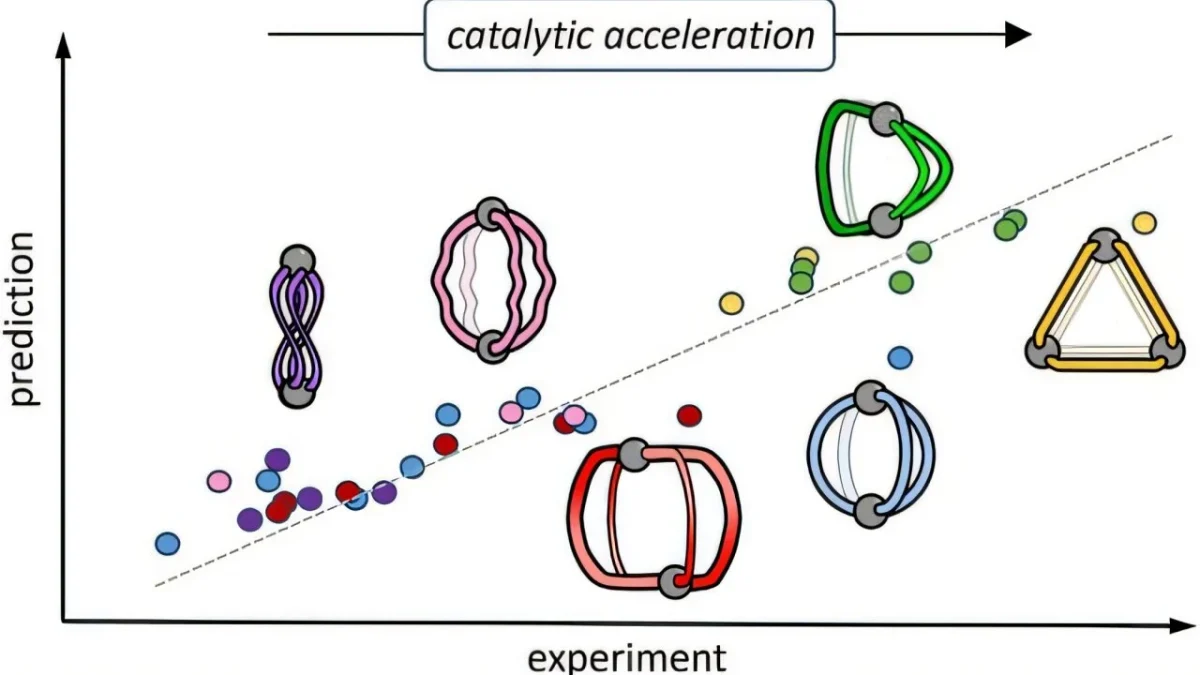
Scientists from Birmingham, Edinburgh, and Oxford used machine learning to analyze thirty palladium-based molecular cages and found that compact, rigid structures with specific metal arrangements drive catalytic activity.
New Screening Method Evaluates Thirty Cages
Researchers from the universities of Birmingham, Edinburgh, and Oxford developed a rapid screening technique to assess thirty distinct palladium-based molecular cage structures in a single study. Led by Professor Paul Lusby of the University of Edinburgh, the team avoided laborious trial-and-error experimentation by assembling and testing cages immediately in solution. This approach allowed them to evaluate performance differences that ranged from the least effective to catalysts more than 10,000 times more active than their counterparts.
Machine Learning Reveals Design Principles
Professor Fernanda Duarte's group at the University of Oxford analyzed the experimentally measured reaction rate data using artificial intelligence and machine learning models. Dr. Tomasz Piskorz noted that the team described cages using physically motivated features capturing shape, size, volume, and electrostatics to correlate with reactivity. The computational efforts identified that compact, rigid cages performed best while the precise arrangement of internal metal atoms mattered more than overall cavity size.
Electrical Environment Predicts Reaction Success
The study found that the electrical environment inside the cage helped make it easier for chemical reactions to occur. Dr. According to Jamie Lewis, slight variations in cage angle orientation served as some of the most powerful indicators for catalytic performance. These findings support sustainability goals by showing how efficient catalysts can reduce energy consumption and decrease waste production in manufacturing processes.
Reported by one outlet
Only one outlet has published this. Nothing here has been checked against a second report, so read it as that outlet's account and follow the link below for the original.
Reported by
1 independent outlet. Headline as published. Links open the original report.