Researchers find water drives elastin elasticity in human tissues
University of Connecticut scientists published new evidence on November 9 that water molecules drive the elasticity of human elastin proteins.
New study reveals hydration role
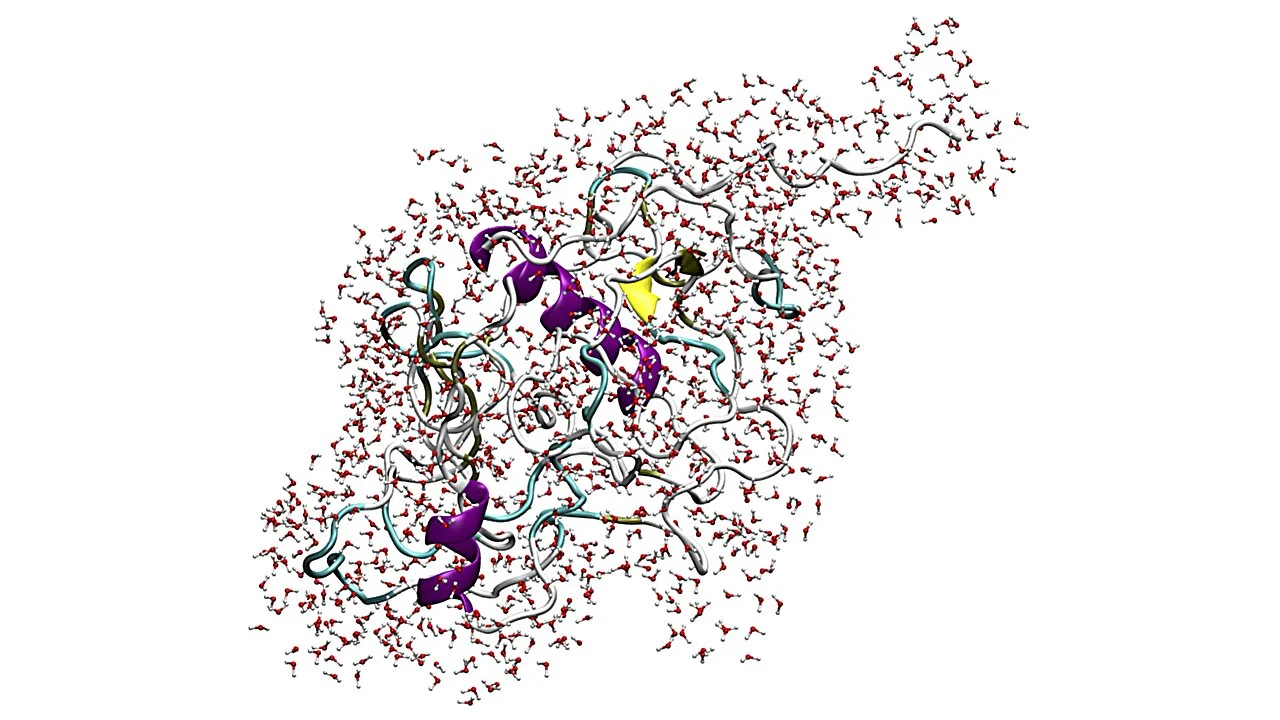
Researchers at the University of Connecticut College of Engineering used advanced computer simulations to investigate molecular mechanisms behind elastin. Anna Tarakanova, who serves as an associate professor within the School of Mechanical, Aerospace, and Manufacturing Engineering, directed the study alongside postdoctoral researcher Metehan Çam. Their study published November 9 in Nature Communications suggests water plays a much larger role than previously understood. The team found that stretching elastin exposes more protein surface to water, drawing additional molecules into a thin surrounding layer.
Simulations separate protein and water
To examine those mechanisms, researchers built a computer simulation of a 225-amino-acid segment within human tropoelastin at the atomic level. D.E. provided access to the dedicated Anton 3 supercomputer located at the Pittsburgh Supercomputing Center for their use. Shaw Research for this project. Researchers monitored the protein in its relaxed condition for 60 microseconds before contrasting that data against a completely stretched reference state. This approach enabled them to calculate each component's entropy separately rather than measuring combined effects of protein and water.
Implications for aging tissues
This finding may impact studies concerning biological aging, the breakdown of tissues, and creating fresh biomaterials. With advancing years, elastin fibers may experience chemical changes, causing tissues to lose some capacity for regaining their original form. According to Tarakanova, elastin functions as a coupled protein-water system rather than merely a dry molecular spring, while Çam observed that hydration water accounts for the primary entropy changes recorded in their study.
Reported by one outlet
Only one outlet has published this. Nothing here has been checked against a second report, so read it as that outlet's account and follow the link below for the original.
Reported by
1 independent outlet. Headline as published. Links open the original report.