Queen’s University Belfast team identifies Neptune Trojan asteroids using Rubin Observatory data
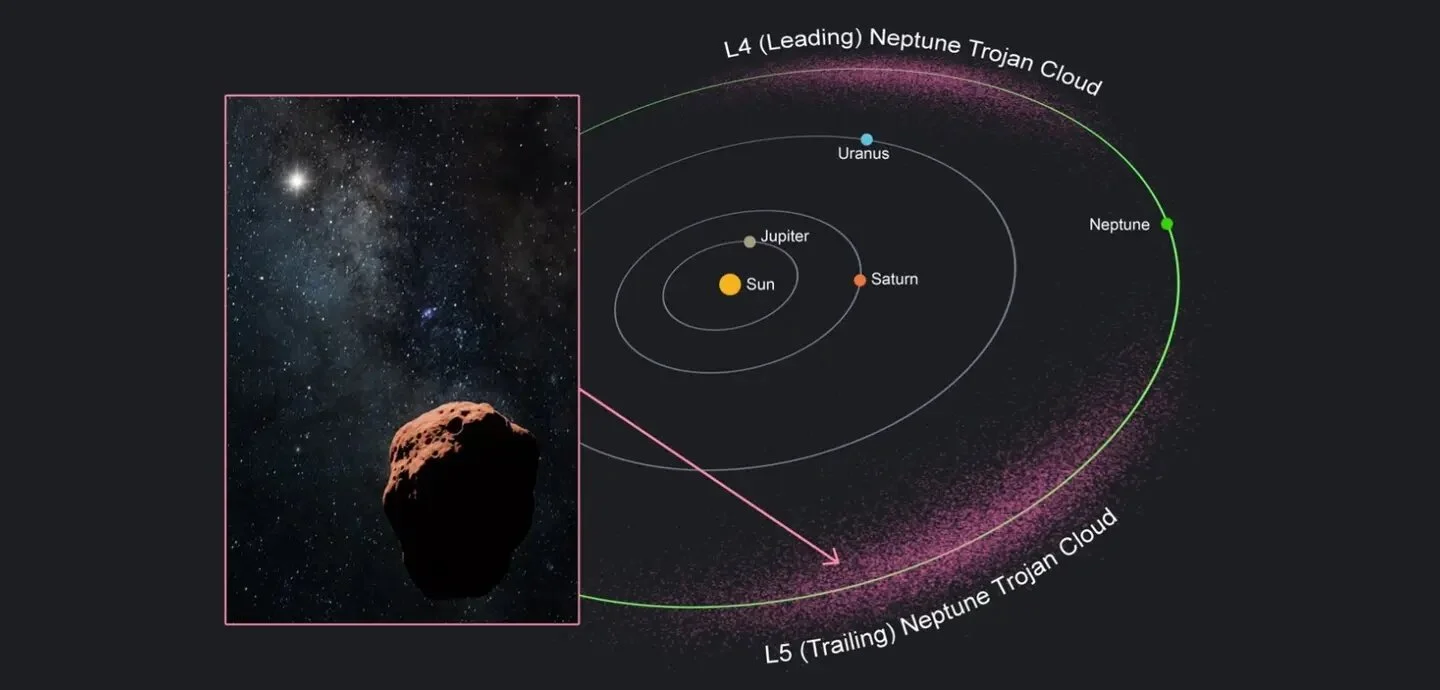
An international team led by Queen's University Belfast researchers has identified Neptune's trailing Trojan asteroids after analyzing data from the Vera C. Rubin Observatory.
Decades-long search finally resolved
Astronomers observed Jupiter Trojans starting in 1906 but could not find similar families around Neptune until now. The mystery of the missing asteroids has been solved by this new discovery. Researchers published their findings in a paper within The Astrophysical Journal Letters.
Rubin telescope enabled detection
The team utilized the sharp optics and rapid survey capabilities of the Vera C. Rubin Observatory located in Chile. This ground-based telescope allowed them to identify two confirmed asteroids and one candidate member of the trailing group.
Global collaboration drives success
Dr. Meg Schwamb from Queen's University Belfast led the project alongside scientists from multiple institutions worldwide. Partners included the Planetary Science Institute, JHUAPL, and the NSF's NOIRLAB among others.
Reported by one outlet
Only one outlet has published this. Nothing here has been checked against a second report, so read it as that outlet's account and follow the link below for the original.
Reported by
1 independent outlet. Headline as published. Links open the original report.