Paleontologists link ancient fish evolution to eye pigment granule shapes
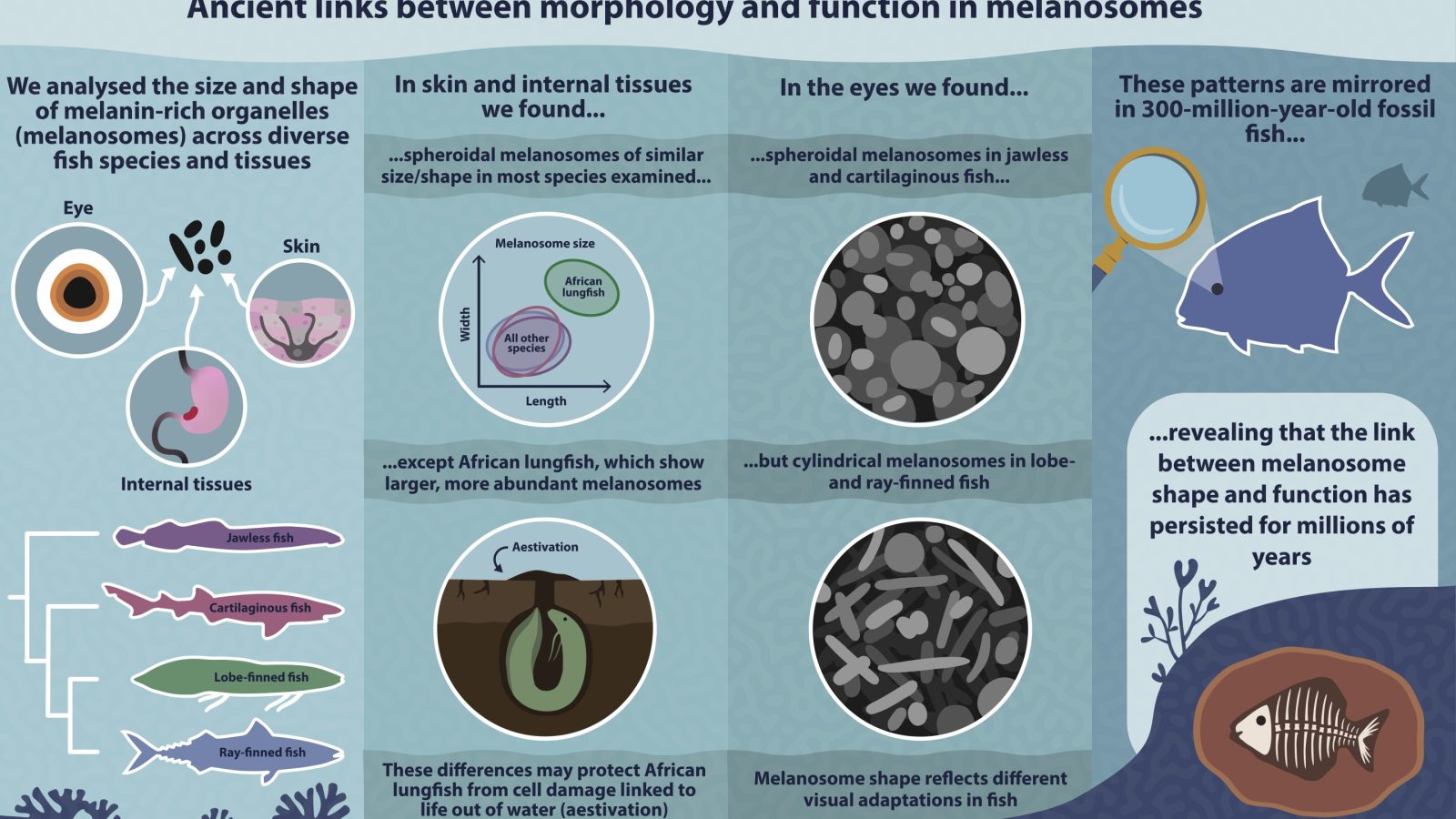
University College Cork researchers published findings today linking the evolution of major fish groups to the shape and location of melanosomes in fossils from Illinois.
Modern species show distinct patterns
Scientists measured roughly 23,000 microscopic structures from the eyes, skin, and organs of twelve modern fish types. These specimens represented jawless fishes, cartilaginous fishes, and bony fishes to compare their biological functions. The team found striking differences in how eye melanosomes vary between these major living groups.
Ancient fossils confirm long history
The study compared modern data with 3,000 fossilized granules preserved in 300-million-year-old fish remains from the Mazon Creek biota. These ancient samples suggest that melanosomes have played a key role since major fish groups evolved around 445 million years ago. The shapes and abundance of these tiny structures survive clearly in the rock record.
Melanin protects internal organs
While melanin is known for coloring skin and hair, it also shields internal organs from harmful substances in vertebrates. Researchers stored this pigment in microscopic structures that come in different shapes and sizes across species. Little was previously known about how these variations function or why they differ among fish.
Reported by one outlet
Only one outlet has published this. Nothing here has been checked against a second report, so read it as that outlet's account and follow the link below for the original.
Reported by
1 independent outlet. Headline as published. Links open the original report.