Oxford physicists find quantum entanglement survives in heavy Z bosons at CERN
University of Oxford researchers reported that heavy Z bosons produced at CERN's Large Hadron Collider on September 20, 2026, showed evidence of quantum entanglement during Higgs boson decays.
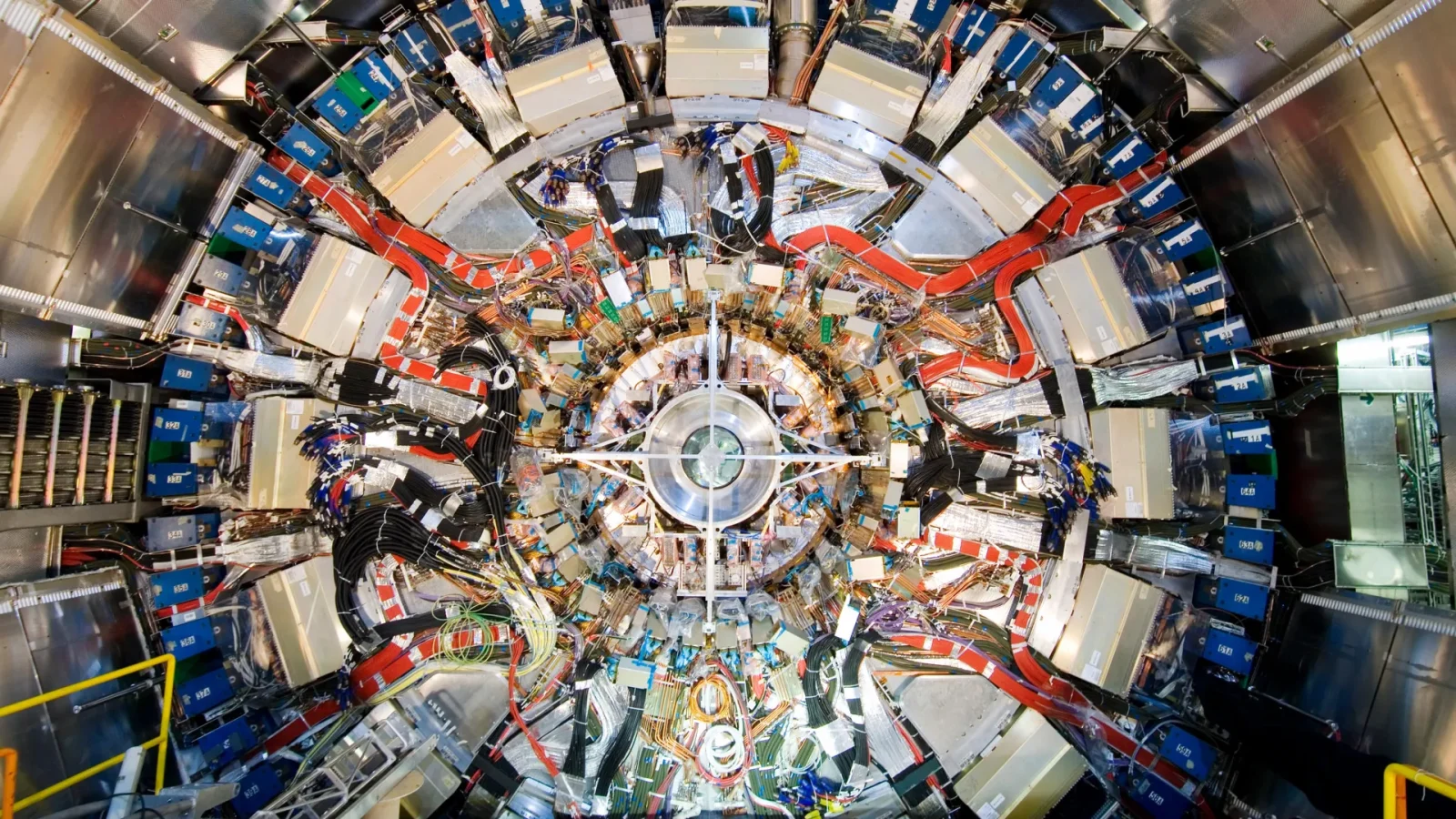
Heavy particles show quantum links
Physicists detected strong evidence that fleeting Z bosons can become quantum entangled. This finding occurred during the decay of Higgs bosons inside the Large Hadron Collider. The result confirms that Einstein's concept of spooky action at a distance holds under extreme laboratory conditions.
Previous observations involved lighter particles
Scientists had previously observed this effect in systems involving photons, electrons and trapped ions. Those earlier experiments did not involve the heaviest and shortest-lived particles ever produced. The new study expands the known range of particles that exhibit entanglement.
Results published in Physical Review Letters
The research team included members from the University of Oxford who helped demonstrate these phenomena. Their findings have been published in the journal Physical Review Letters. Quantum entanglement remains central to emerging technologies like quantum computers and secure communication networks.
Reported by one outlet
Only one outlet has published this. Nothing here has been checked against a second report, so read it as that outlet's account and follow the link below for the original.
Reported by
1 independent outlet. Headline as published. Links open the original report.