Northwestern researchers develop electrode to capture phosphate from wastewater
Northwestern University and Argonne National Laboratory scientists published a study on November 18 describing an electrified fabric that captures phosphate from water.
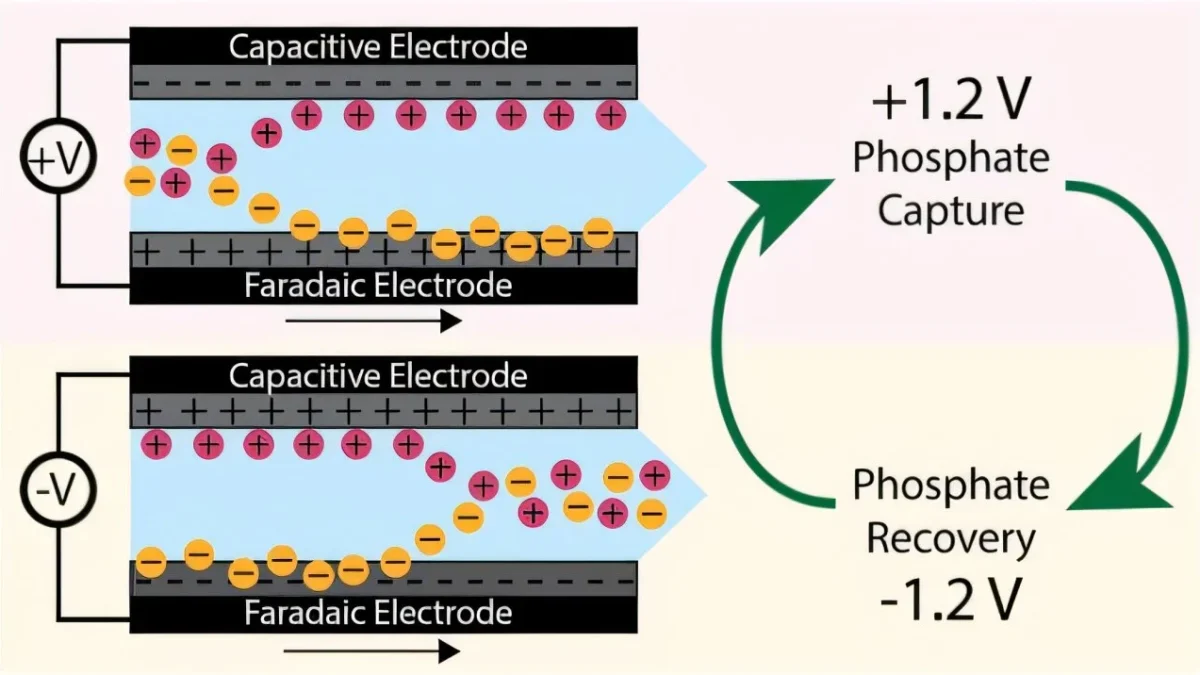
Electrode uses voltage to trap minerals
The new device is a reusable electrode made from carbon cloth coated with magnetite. Applying a positive voltage more than doubles the amount of phosphate captured by the material. Reversing the electrical voltage releases the trapped phosphate for potential recovery and reuse in fertilizers. This method avoids adding chemical regenerants to the water during the capture process.
Pollution causes algal blooms in lakes
Rain washing fertilizer from farmland carries phosphate into nearby waterways and triggers harmful algal blooms. Flowers block streams, emit harmful chemicals, and steal the oxygen that fish and other creatures require to survive. Kelly Matuszewski noted that even small dilute amounts of phosphate cause serious issues in the Great Lakes region. The research was conducted at Argonne National Laboratory where Matuszewski worked with scientist Lauren Valentino.
Vinayak Dravid leads materials science team
At Northwestern, Vinayak Dravid holds the title of Abraham Harris Professor for the department of Materials Science and Engineering. He previously founded the NSF-supported Soft and Hybrid Nanotechnology Experimental Resource known as SHyNE. The study aims to recover valuable resources from contaminated water while minimizing secondary waste. Excess nutrients feed massive algal blooms that produce toxins harmful to humans and animals.
Reported by one outlet
Only one outlet has published this. Nothing here has been checked against a second report, so read it as that outlet's account and follow the link below for the original.
Reported by
1 independent outlet. Headline as published. Links open the original report.