New research suggests Venus swallowed its moon due to gravity and spin
Scientists published new findings in The Astrophysical Journal explaining how Venus likely absorbed a rocky satellite without a catastrophic collision.
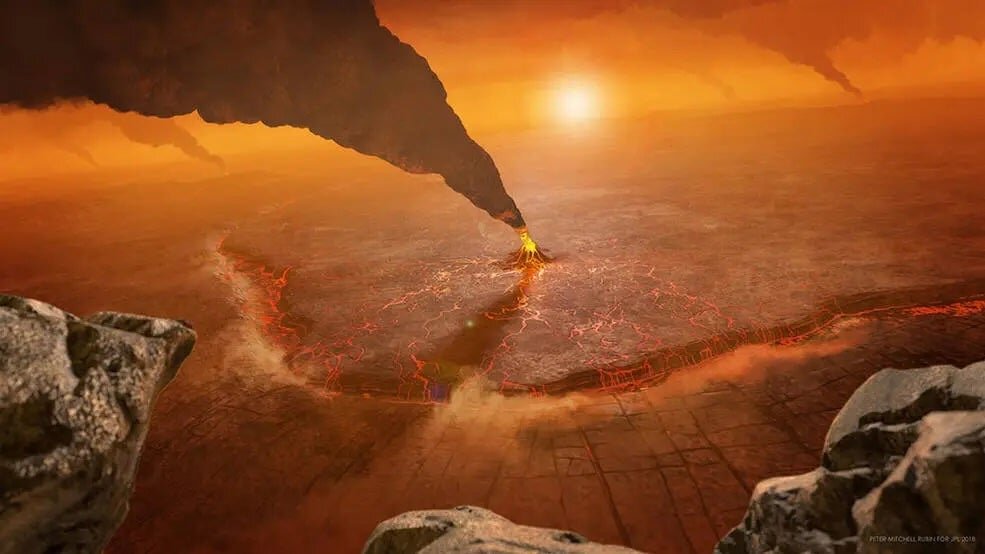
Venus did not need a catastrophe
Previous theories suggested the planet lost its moon to a massive impact or never formed one initially. Lead author Stephen Kane from UC Riverside stated that neither of those scenarios fits the current evidence. His study indicates the planet's own gravity and rotation rate caused the satellite to collapse onto it naturally.
Earth spins faster than Venus
NASA mirrors left by Apollo 11 allow precise measurement showing Earth's moon moves away at four centimeters per year. This recession happens because Earth rotates quickly every 24 hours and transfers energy to the satellite. In contrast, Venus takes 243 Earth days to complete a single rotation in the opposite direction.
Gravity pulled the moon inward
The combination of planetary mass and slow spin created conditions where the moon could not maintain its orbit. Researchers believe these specific physical properties led to the satellite being swallowed by the planet over time. This explanation replaces older ideas requiring violent destruction or a lack of formation events.
Reported by one outlet
Only one outlet has published this. Nothing here has been checked against a second report, so read it as that outlet's account and follow the link below for the original.
Reported by
1 independent outlet. Headline as published. Links open the original report.