NASA Webb Telescope finds orderly weather patterns in distant brown dwarf
Researchers at Trinity College Dublin used NASA's James Webb Space Telescope to analyze the atmospheric states of SIMP 0136, a brown dwarf located 20 light-years from Earth, on October 17, 2026.
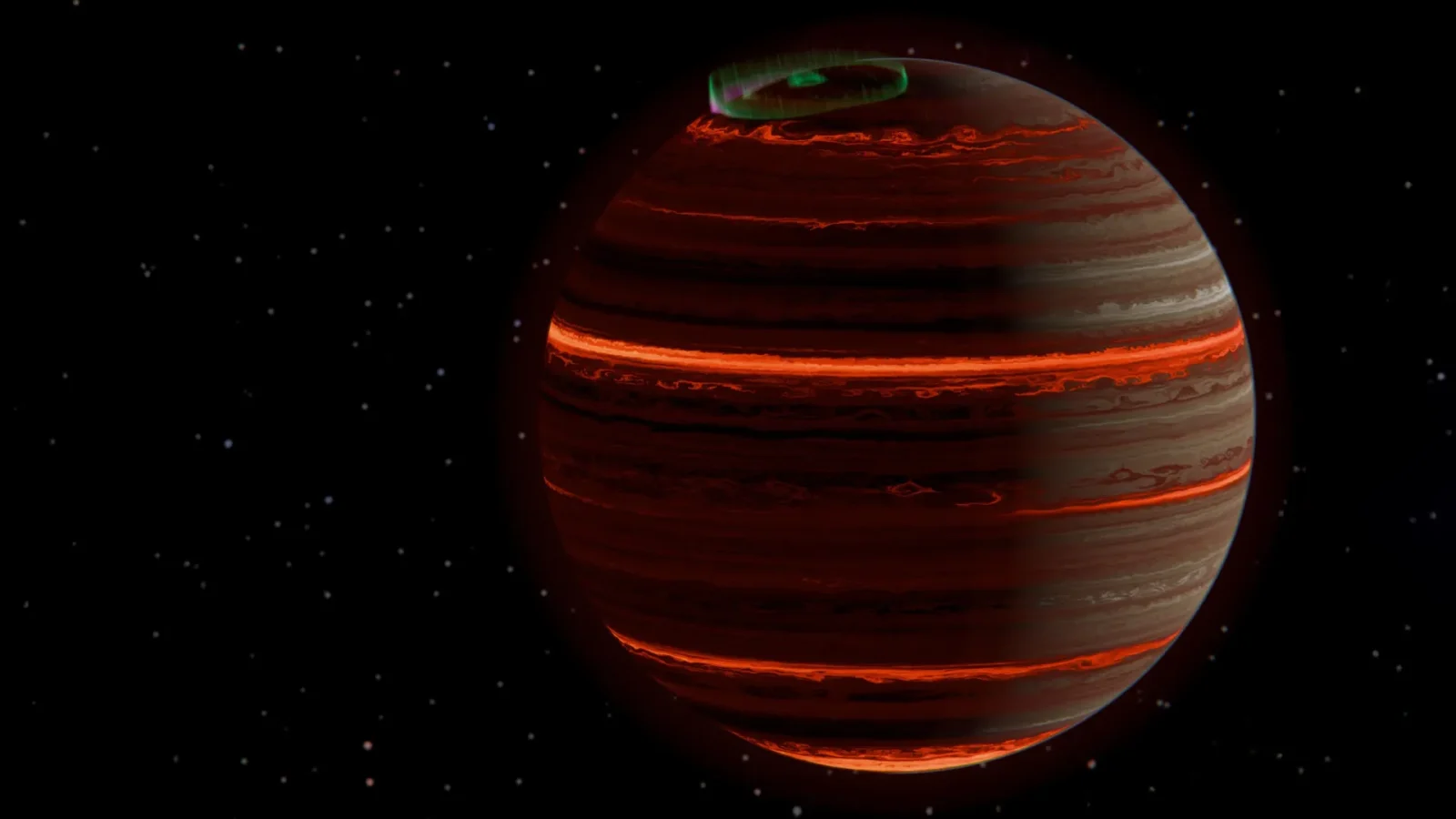
Temperature drives atmospheric changes
Scientists determined that the complex weather of SIMP 0136 is governed primarily by shifts in temperature. These thermal variations cause the atmosphere to transition between distinct recurring states. The findings show that what appeared turbulent is actually a structured system.
Cloud structure shapes conditions
The vertical arrangement of clouds plays a second major role in defining the world's weather patterns. Analysis of data from the James Webb Space Telescope revealed these specific atmospheric dynamics. This method allows astronomers to decode weather on worlds far beyond our solar system.
New tool for study
This breakthrough provides a powerful new way to understand conditions on distant objects. The research team applied a mathematical technique called Principal Component Analysis to the observations. Understanding these patterns helps scientists investigate planets and brown dwarfs in other star systems.
Reported by one outlet
Only one outlet has published this. Nothing here has been checked against a second report, so read it as that outlet's account and follow the link below for the original.
Reported by
1 independent outlet. Headline as published. Links open the original report.