NASA tests RS-25 engine for Artemis missions
NASA successfully fired an RS-25 rocket engine for 200 seconds on November 18 at its Stennis Space Center in Mississippi.
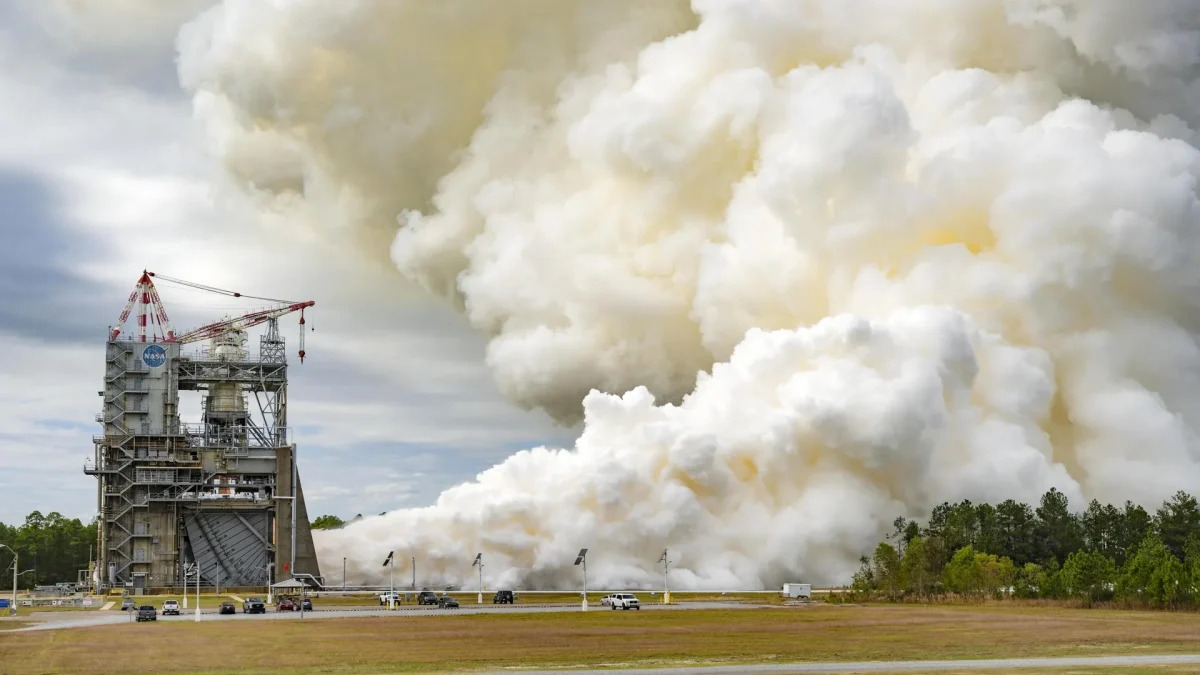
Engine runs full duration test
Engineers ignited RS-25 engine number 10001 at the Fred Haise Test Stand near Bay St. Louis. The developmental unit operated for exactly three minutes and 20 seconds during the trial. This specific motor is not planned for actual spaceflight but provides critical performance data. Results will help improve power, efficiency, and reliability for future flight versions of the engine.
Preparation for Artemis IV landing
The test supports preparations for the 2028 Artemis IV mission scheduled to land astronauts on the lunar surface. The future launch is set to take off at the Kennedy Space Center in Florida aboard the huge Space Launch System rocket. Each SLS vehicle uses four RS-25 engines that generate up to 2 million pounds of thrust together. These motors are essential for propelling the Orion spacecraft off the pad and into deep space.
Contractors verify launch readiness
Specialists from NASA, L3Harris Technologies, and Nova Space Solutions worked together to conduct the verification process. The agency aims to explore the Moon's South Pole before establishing a sustained human presence there. Engineers will use this data to ensure engines can handle extreme launch conditions reliably. Success here lays groundwork for the first crewed journey toward Mars.
Reported by one outlet
Only one outlet has published this. Nothing here has been checked against a second report, so read it as that outlet's account and follow the link below for the original.
Reported by
1 independent outlet. Headline as published. Links open the original report.