Mars gas leaks hint at active volcanism near Alba Mons
An international team led by Alexander Trokhimovskiy reports that hydrogen chloride emissions from fractures on Mars suggest ongoing volcanic activity in November 2026.
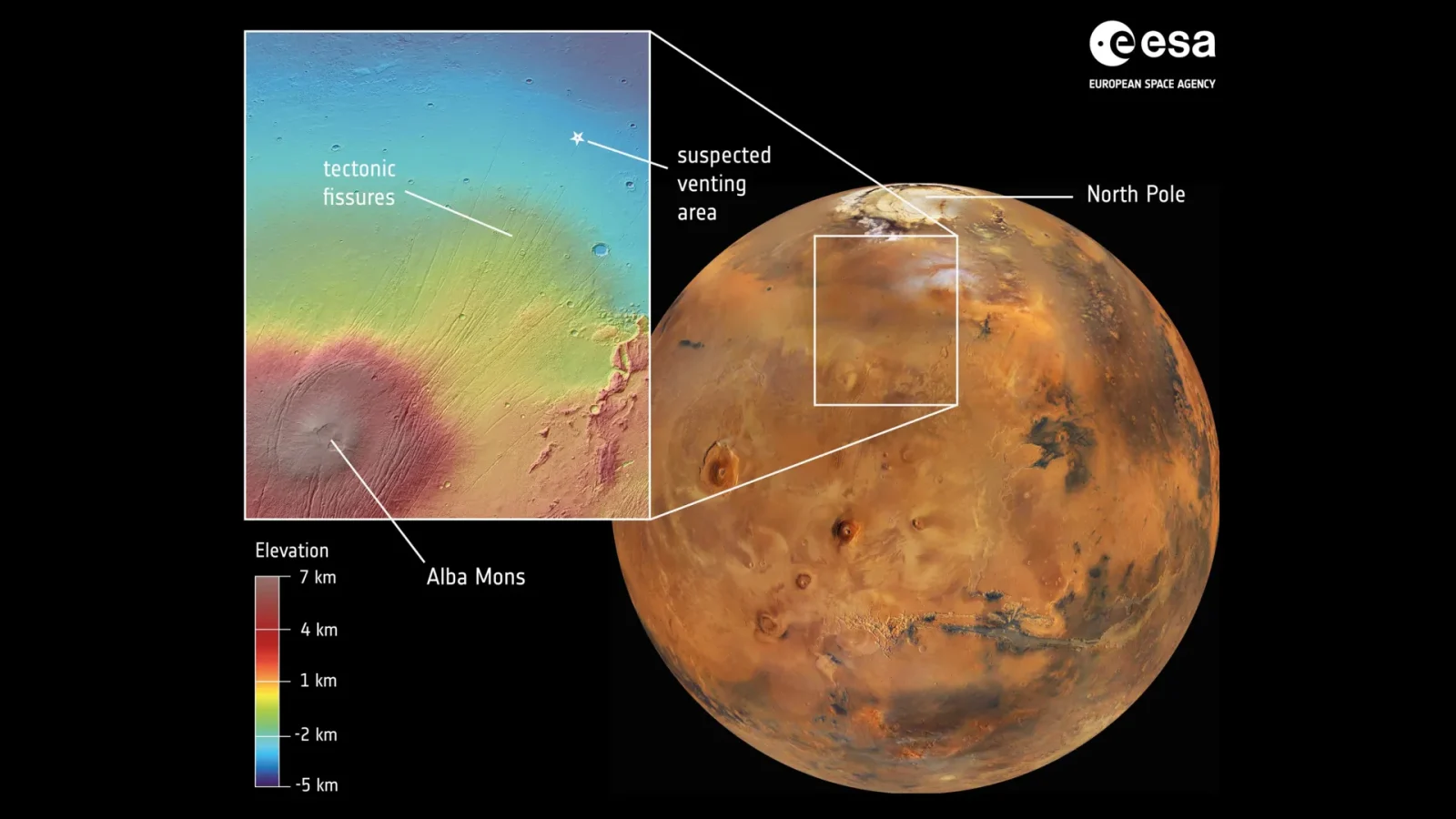
Unusual gas patterns detected
Researchers identified high concentrations of hydrogen chloride above cracks in the Alba Mons volcanic region. This finding contradicts normal seasonal cycles where such gases usually vanish during northern summer. The European Space Agency's ExoMars Trace Gas Orbiter first spotted this chemical in 2021. Elevated levels appeared repeatedly over specific fractures despite expectations of low atmospheric presence.
Heat source remains underground
Daniel Mège from the Polish Academy of Sciences states internal heat likely drives these emissions. Hot magma deep beneath the surface could be releasing gases through newly formed fissures. On Earth, hydrogen chloride often escapes from openings connected to active magma chambers. Scientists believe similar processes might currently occur on the Red Planet.
Implications for microbial life
Hidden pockets of warmth and chemical energy could support microbial life beneath the surface. Mars hosts the largest volcanoes in the Solar System yet their current status is unclear. Seismic instruments have recorded marsquakes proving the planet experiences ongoing geological movement. No direct observation of fresh lava flows has occurred recently on the surface.
Reported by one outlet
Only one outlet has published this. Nothing here has been checked against a second report, so read it as that outlet's account and follow the link below for the original.
Reported by
1 independent outlet. Headline as published. Links open the original report.