Lawrence Livermore researchers simulate nuclear asteroid deflection methods
Lawrence Livermore National Laboratory scientists published new simulations in The Planetary Science Journal examining how nuclear devices could deflect or disrupt threatening asteroids.
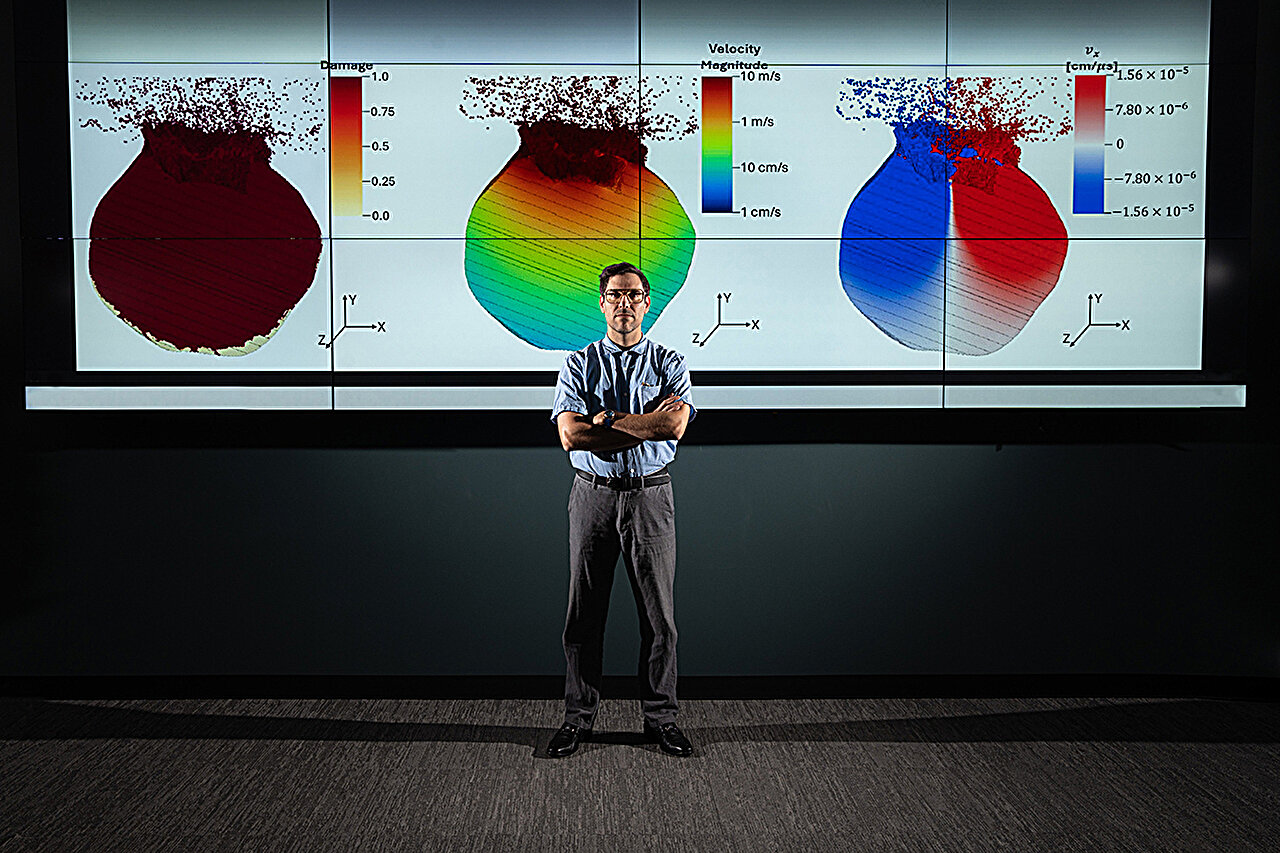
New three-dimensional modeling approach
Researchers at Lawrence Livermore National Laboratory are developing advanced three-dimensional simulations to test nuclear mitigation strategies. Their work uses the Spheral simulation code to model how an asteroid reacts when X-rays from a nearby explosion heat and vaporize its surface material. This method validates earlier approaches before studying complex scenarios where an object might be broken apart.
Deflection versus disruption tactics
One strategy involves deflection, which imparts a small velocity change to move the asteroid off course while keeping it intact. Another tactic is disruption, intentionally fragmenting the rock so that no single piece remains large enough to cause significant damage. These options serve as emergency alternatives when warning times are short or when dealing with larger objects.
Comparison to past tests
NASA previously demonstrated a kinetic-impact deflection technique in 2022 by striking the asteroid moon Dimorphos with a spacecraft. The new nuclear simulations offer a different energy delivery method that could work for situations where physical impact is not feasible. Experts note that early detection remains essential for preventing any hazardous impact from occurring.
Reported by one outlet
Only one outlet has published this. Nothing here has been checked against a second report, so read it as that outlet's account and follow the link below for the original.
Reported by
1 independent outlet. Headline as published. Links open the original report.