Kyushu University researchers find small histone differences shape sperm gene regulation
Researchers from Kyushu University and Tokushima University published findings on November 9, 2026, showing that minor amino acid changes in a mouse histone variant alter chromatin behavior during spermatogenesis.
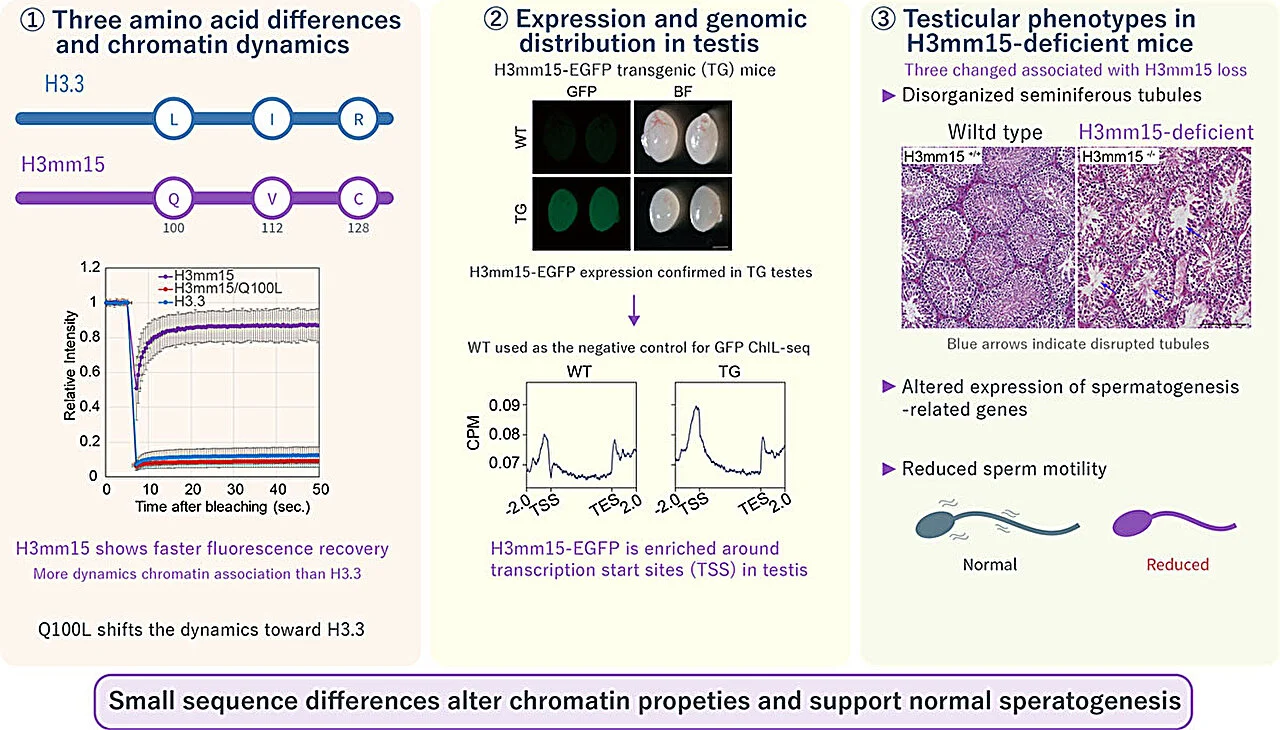
Mice lacking H3mm15 show defects
A team led by Professor Akihito Harada generated mice without the H3mm15 protein to test its function. These animals displayed disorganized seminiferous tubules where sperm normally develop inside the testis structure. Sperm motility was also reduced in the deficient mice compared to healthy controls. Gene expression changed significantly, particularly for genes involved in the transition into meiosis stages.
Three amino acids change stability
The H3mm15 protein differs from conventional H3.3 by exactly three amino acids in its sequence. Structural analysis revealed that H3mm15 forms less stable nucleosomes than the standard H3.3 variant found in cells. Live-cell measurements indicated more dynamic chromatin association because glutamine at position 100 strongly influences this behavior. RNA analyses showed the gene encoding H3mm15 is predominantly expressed within the testis tissue.
Transgenic tests confirm enrichment
Analysis of transgenic mouse testes detected H3mm15-EGFP enrichment around transcription start sites near gene promoters. Within cultured cell samples, H3mm15 integrated into chromatin with lower efficiency compared to the standard H3.3 subvariant. The study suggests reduced nucleosome stability alone does not explain all effects on gene regulation observed in vitro. Professor Harada stated that these small differences contribute to maintaining normal spermatogenesis in mice.
Reported by one outlet
Only one outlet has published this. Nothing here has been checked against a second report, so read it as that outlet's account and follow the link below for the original.
Reported by
1 independent outlet. Headline as published. Links open the original report.