HZDR team proposes electrical guardrails for graphene solar cells
Researchers at the HZDR Institute of Theoretical Physics propose a new method to separate charge carriers in graphene for solar applications.
Graphene lacks a bandgap
Graphene consists of a single layer of carbon atoms where electrons move with high mobility. However, the material does not have a bandgap like silicon, which prevents it from converting light into electricity efficiently. Absorbed light creates electrons and holes that must be separated to generate usable energy.
Magnetic fields guide carriers
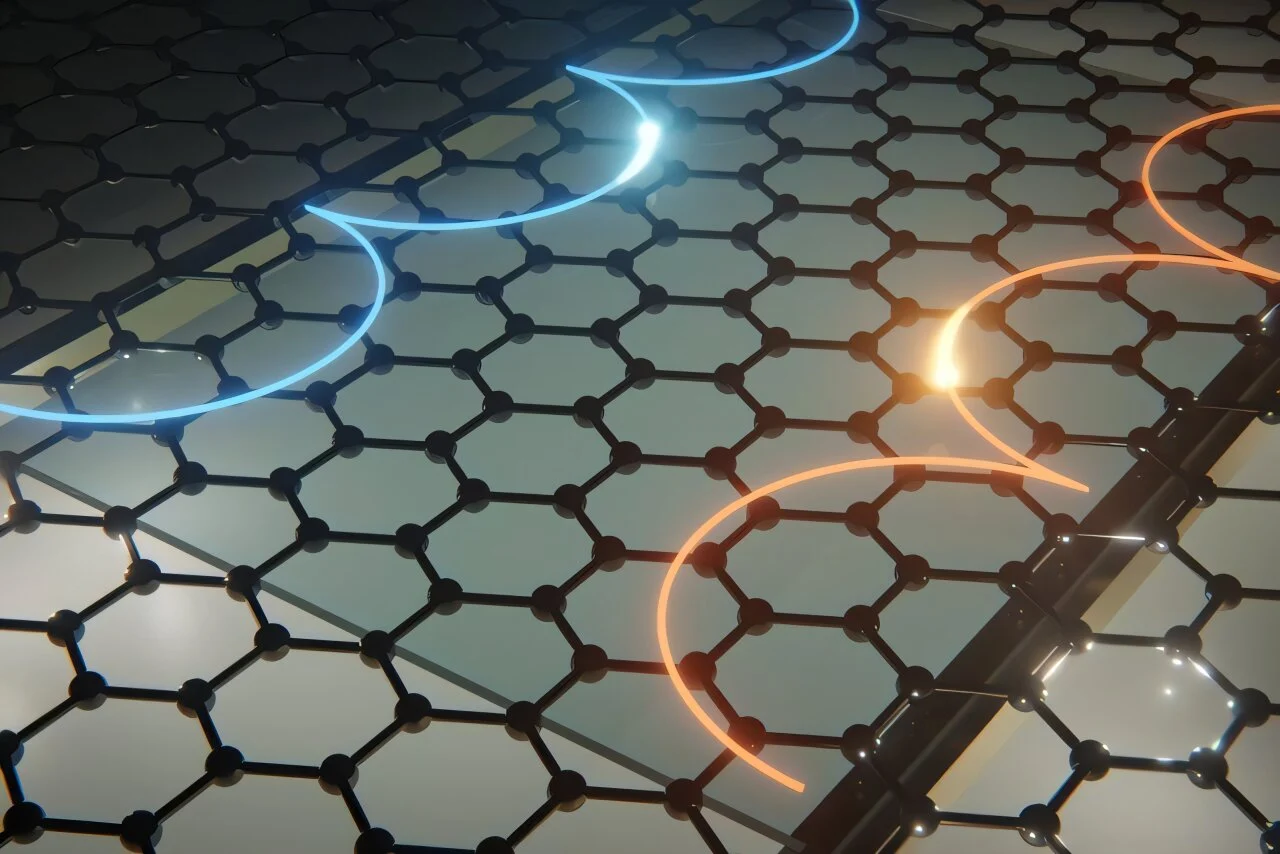
A magnetic field applied to the graphene forces charge carriers into circular paths. Tiny edges act as guardrails to guide these carriers in opposite directions so they drift apart. This separation allows the absorbed light energy to be harnessed effectively.
New concept avoids cutting
Creating physical edges by cutting or folding the material is challenging and difficult to scale up. The HZDR team suggests a new concept that replaces voltage generation with electrical guardrails instead of relying on cut edges. This approach aims to solve the scaling prerequisite for practical applications.
Reported by one outlet
Only one outlet has published this. Nothing here has been checked against a second report, so read it as that outlet's account and follow the link below for the original.
Reported by
1 independent outlet. Headline as published. Links open the original report.