Humidity changes how smoke pollutants transform after dark
Researchers at the University of Kentucky published new findings in Environmental Science & Technology showing that air moisture levels alter nighttime chemical reactions from biomass burning.
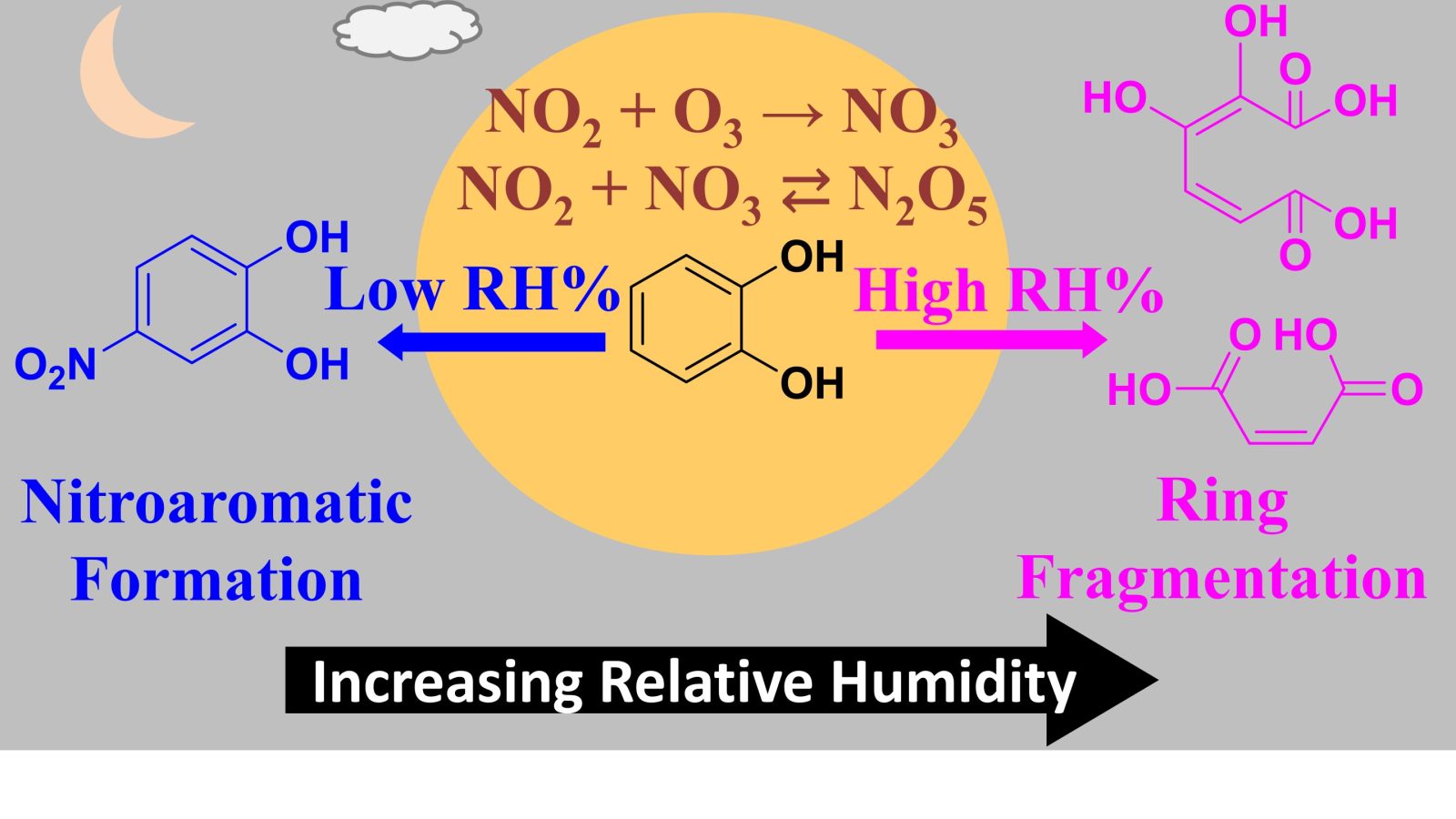
Dry air favors nitration pathways
Under dry conditions, the oxidation of catechol by nitrate radicals leads to nitration and oligomerization. Previous work identified specific compounds like nitrocatechols and dinitrocatechols forming during these dry periods. These products are accompanied by strong near-ultraviolet absorption associated with brown coloration.
Water redirects chemical reactions
Increasing humidity shifts the reaction pathways away from nitration toward different oxidation products. The study examines how catechol reacts with nitrate radicals as air conditions change from dry to increasingly humid. This modulation of chemical routes depends strongly on the amount of water present in the air.
Reported by one outlet
Only one outlet has published this. Nothing here has been checked against a second report, so read it as that outlet's account and follow the link below for the original.
Reported by
1 independent outlet. Headline as published. Links open the original report.