Heriot-Watt chip links telescopes for high-resolution astronomy observations
Researchers at Heriot-Watt University successfully used a tiny photonic chip to link two telescopes at the CHARA Array in California for on-sky observations.
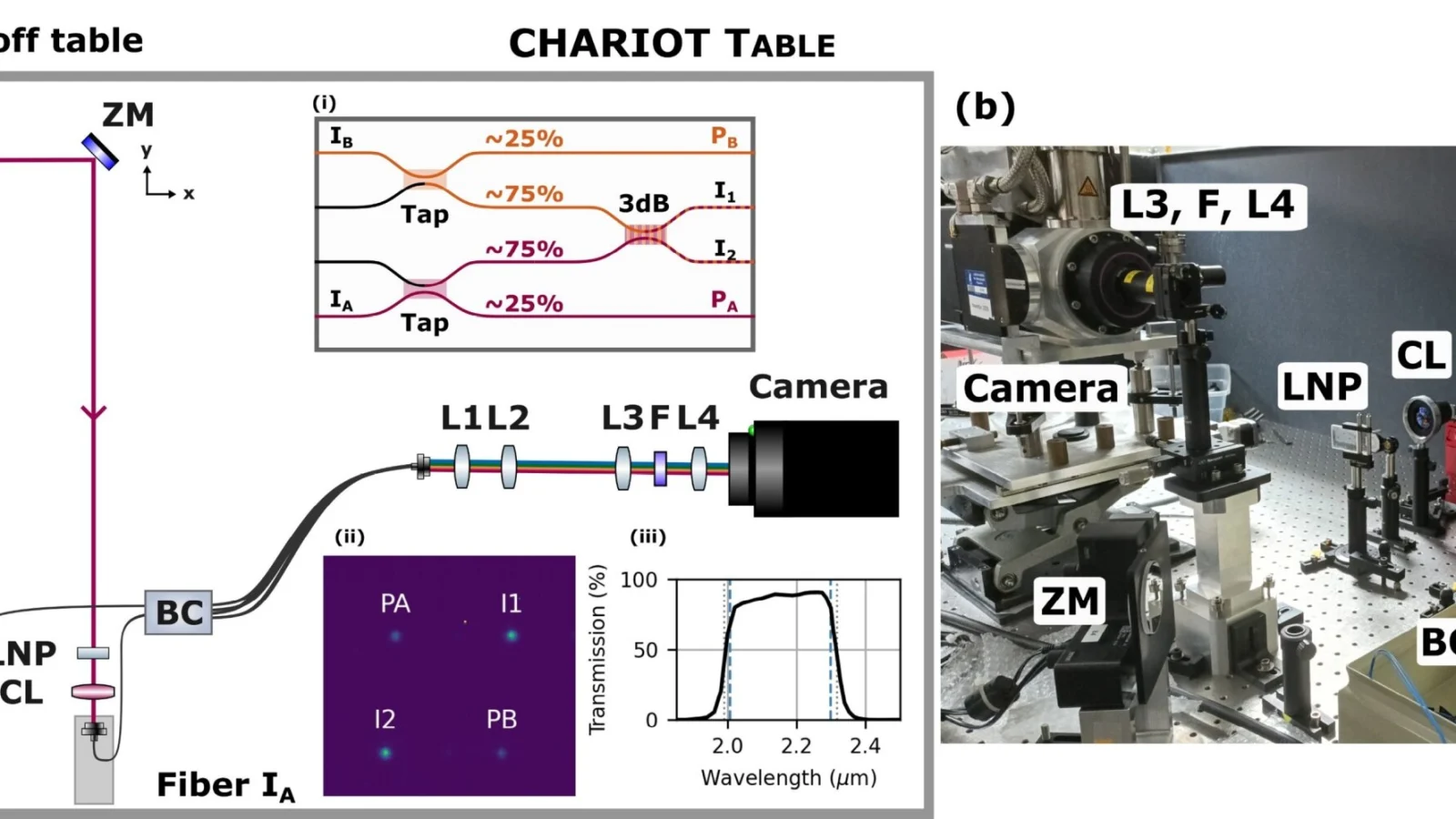
New glass chip combines telescope light
A small glass device developed by scientists guides light through thin channels similar to how integrated circuits move electrons. This technology allows separate instruments to function as one powerful unit for studying celestial objects. The chip fits inside a human hand yet performs tasks that previously needed large optical systems.
First sky test at CHARA Array
The team applied this method during actual observations using the CHARA Array facility in California. That array consists of six telescopes capable of combining signals to achieve extraordinary detail. Results from this trial appear in Monthly Notices of the Royal Astronomical Society.
Future instruments could be smaller
Experts believe this approach will help design future astronomical tools that are more robust and easier to upgrade. These new devices can still deliver the precision required to study distant stars and planetary systems. The work marks an important step toward a new generation of technology.
Reported by one outlet
Only one outlet has published this. Nothing here has been checked against a second report, so read it as that outlet's account and follow the link below for the original.
Reported by
1 independent outlet. Headline as published. Links open the original report.