Graphene oxide nanosheets control drying droplet patterns to form webs or mosaics
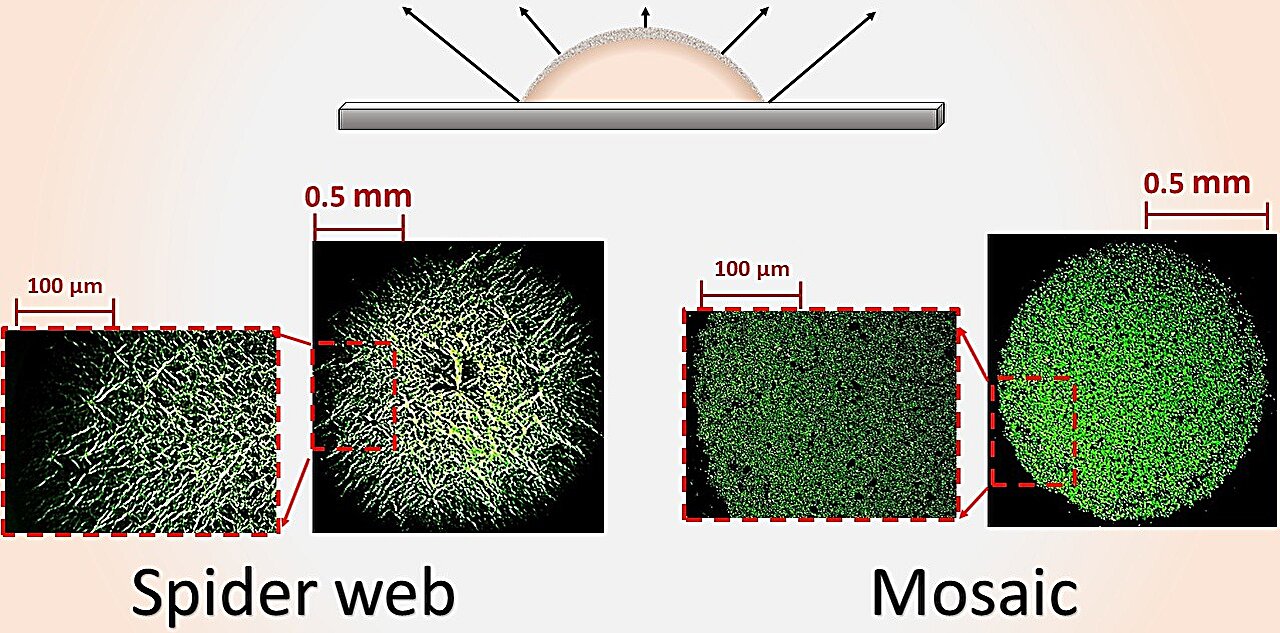
Scientists published a study in Langmuir on September 21, 2026, explaining how graphene oxide nanosheets dictate the shapes left by evaporating liquid drops.
Standard droplets leave unwanted rings
A drop of coffee often leaves a dark ring when water evaporates and pushes particles to the edge. Engineers usually dislike this coffee-ring effect because it prevents controlled patterns in inkjet printing and surface coatings. Researchers needed a method to stop particles from clustering only at the perimeter of the droplet.
Nanosheets create two distinct shapes
The new study found that graphene oxide produces deposits resembling a spider web or a mosaic depending on specific conditions. Changing the size of the nanosheets and the amount of oxygen attached to them alters the final arrangement. These variables allow engineers to tune how the material lands on a surface.
Applications include printed electronics
The ability to control these patterns offers useful capabilities for printed electronics, coatings, and potentially supercapacitors. Graphene oxide combines conductivity-related properties with water compatibility to make sheets easier to disperse in water.
Reported by one outlet
Only one outlet has published this. Nothing here has been checked against a second report, so read it as that outlet's account and follow the link below for the original.
Reported by
1 independent outlet. Headline as published. Links open the original report.