EarthCARE satellite reveals rain breaks marine clouds
The European Space Agency's EarthCARE satellite has provided new data showing how rainfall causes marine stratocumulus clouds to fragment over ocean surfaces.
Rain drives cloud breakup cycle
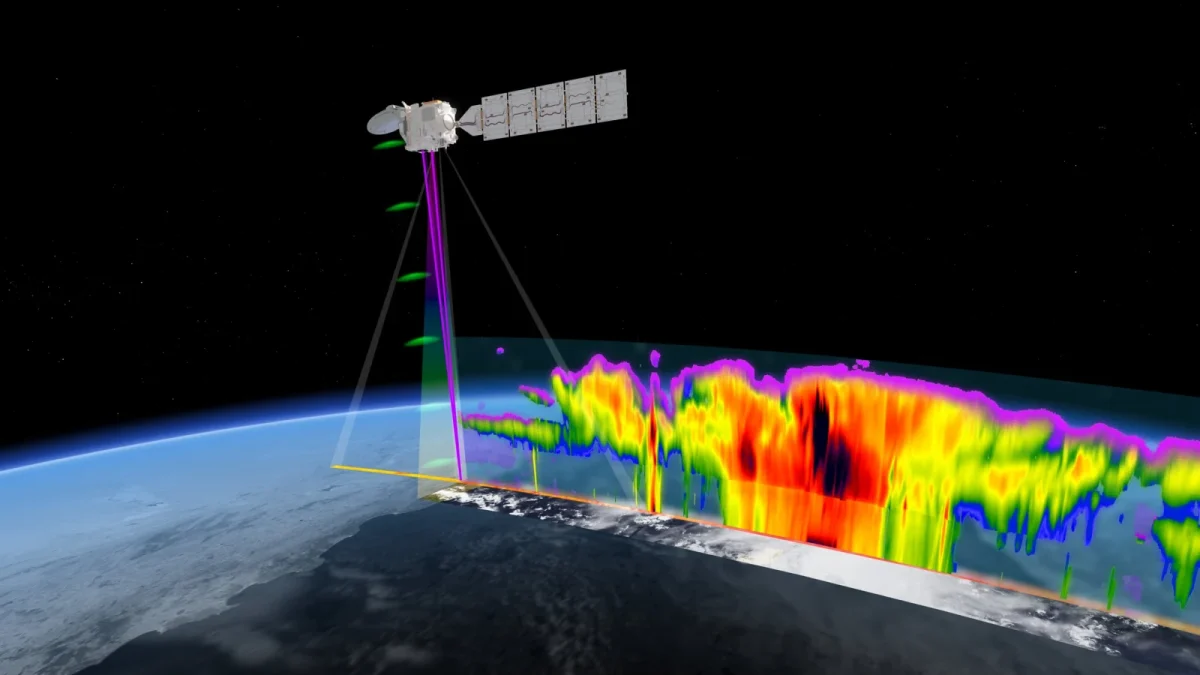
Observations from the EarthCARE mission indicate that rain acts as a primary driver for breaking apart vast marine stratocumulus cloud formations. These low-lying clouds normally reflect significant sunlight back into space, helping to regulate global temperatures effectively. When precipitation occurs within these decks, they transition from a closed-cell pattern to a more fragmented open-cell structure. This structural change exposes dark ocean surfaces that were previously covered by the reflective cloud layer. The exposed water absorbs more solar energy, which contributes to a warming effect on the planet.
New tools profile cloud structure
Previous satellite instruments struggled to observe the internal vertical structure of clouds forming close to the ocean surface. EarthCARE now delivers detailed snapshots regarding droplet properties, fall speeds, and precipitation characteristics that earlier missions missed. Researchers combined images from a geostationary satellite with EarthCARE data to track cloud evolution over time. This combination allowed scientists to see how rain fuels a self-reinforcing cycle of cloud breakup from space. The findings were published recently in the journal Atmospheric Chemistry and Physics.
Energy imbalance grows faster
Earth currently reflects less sunlight back into space than it did in the past, creating a larger energy imbalance. Recent studies suggest that declining marine stratocumulus clouds are one cause of this reduced reflection rate. Scientists note they do not fully understand why these clouds are decreasing or if the trend will accelerate. The observed reduction in reflected sunlight exceeds predictions made by existing climate models. Johanna Mayer from ESA's Earth System Science Hub led the research team analyzing these specific observations.
Reported by one outlet
Only one outlet has published this. Nothing here has been checked against a second report, so read it as that outlet's account and follow the link below for the original.
Reported by
1 independent outlet. Headline as published. Links open the original report.