CRC and MYB proteins form DNA loop for flower nectaries
Researchers at Nara Institute of Science and Technology in Japan published findings on how CRC and MYB proteins create DNA loops to grow nectar organs in flowers.
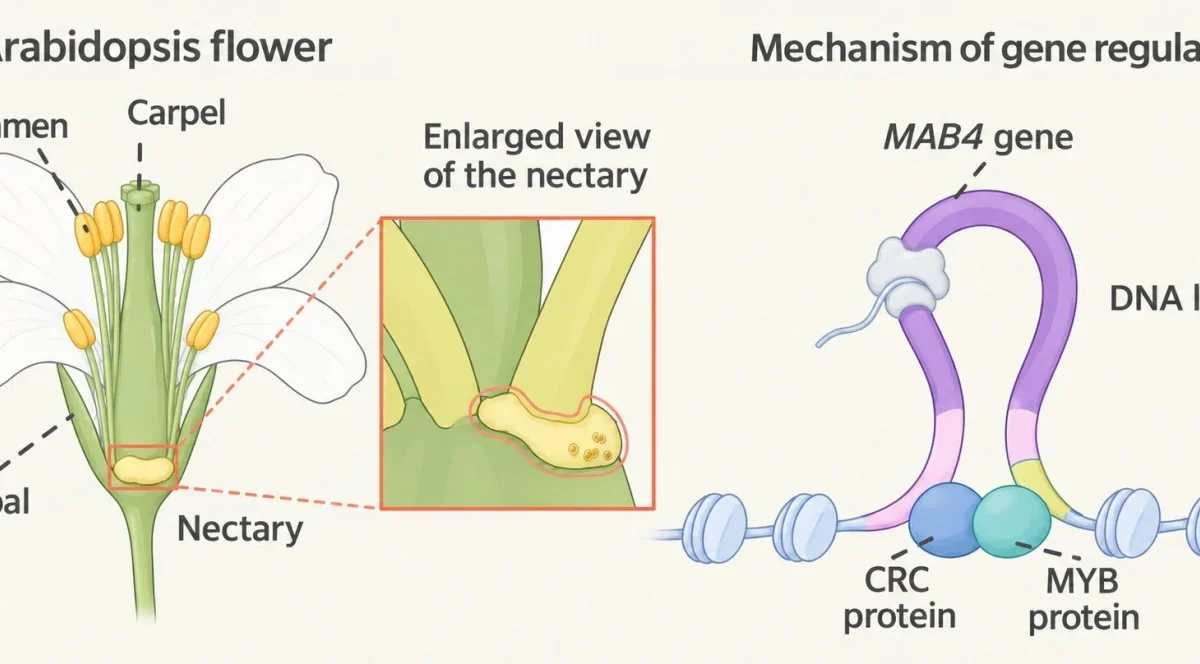
Proteins form chromatin loop structure
A team led by Professor Toshiro Ito used single-nucleus RNA sequencing on Arabidopsis thaliana plants. The researchers found that CRC and MYB proteins aid in creating a DNA loop that encourages organ development. Plants lacking these functions developed smaller nectaries according to the study results. The researchers found CRC interacts with three specific MYB proteins named MYB21, MYB24 and MYB57.
Enhancer region activates MAB4 gene
The team focused on MAB4, a gene involved in nectary growth processes. Researchers pinpointed a regulatory DNA segment located downstream of MAB4 that functions as an enhancer. Disruption of this enhancer reduced MAB4 expression and resulted in smaller nectaries in the model plant. Physical contact between the transcription start site and the downstream enhancer was significantly reduced without functional CRC.
Sugar transport and scent links
Beyond organ development, the study revealed that CRC regulates genes associated with sugar transport. The research also included pathways involved in floral fragrance and terpene synthesis. Professor Ito stated these findings provide new insights into plant organ development mechanisms. Future work could explore how this regulation influences nectar quantity and scent composition.
Reported by one outlet
Only one outlet has published this. Nothing here has been checked against a second report, so read it as that outlet's account and follow the link below for the original.
Reported by
1 independent outlet. Headline as published. Links open the original report.