Cornell researchers switch graphene magnetic states with electric voltage
Researchers at Cornell University published a study in Nature Nanotechnology on October 14 describing how electric voltage slides graphene layers to change their magnetic properties.
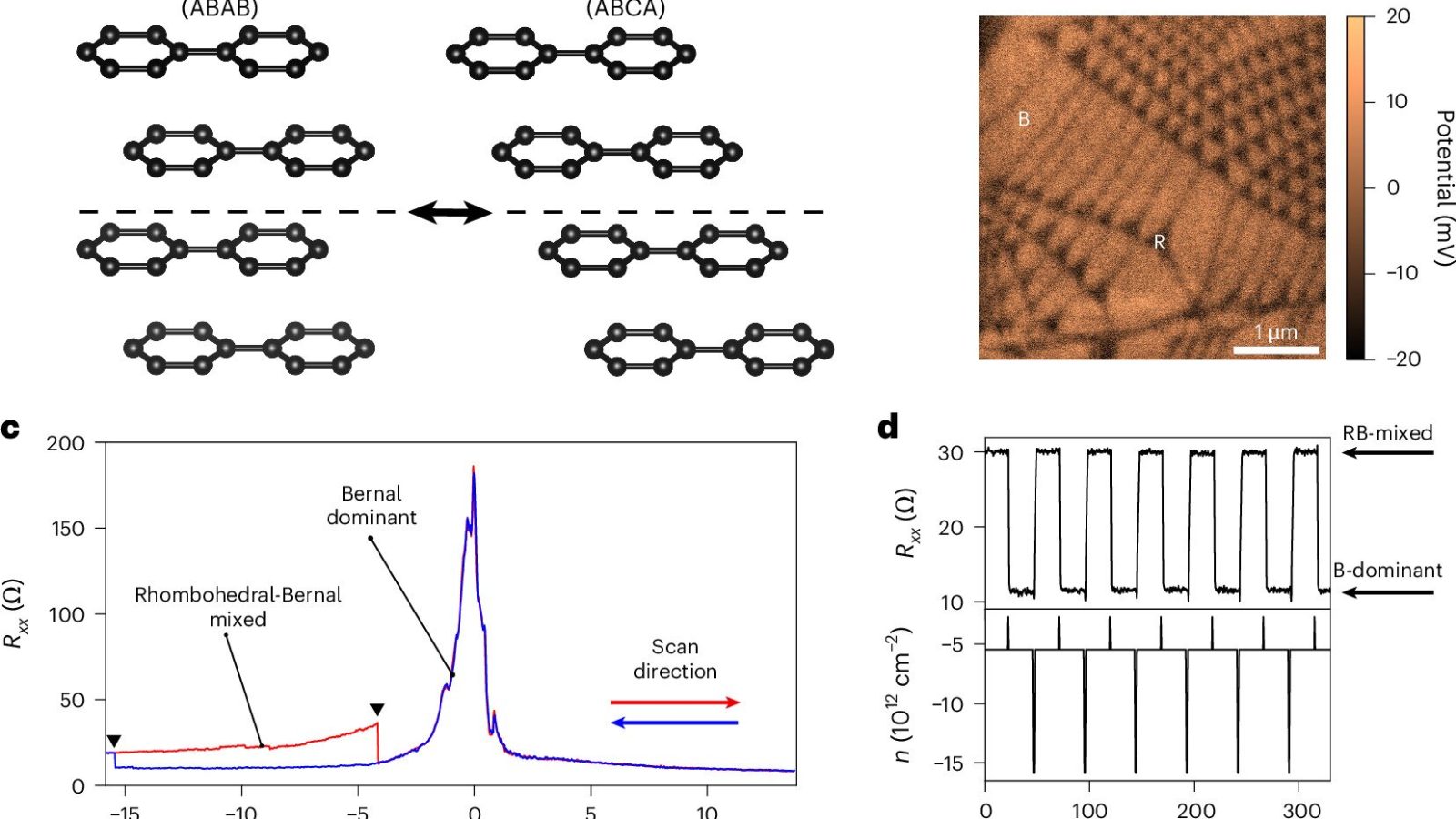
Voltage alters atomic stacking
Applying voltage to a four-layer stack of graphene causes the layers to slide into different atomic arrangements. This movement allows the material to alternate between nonmagnetic and magnetic states without breaking chemical bonds. The new magnetic state persists even after the electrical power is removed.
Structure defines material traits
A material's physical properties depend on how its atoms are arranged rather than just which atoms are present. Graphite and diamond illustrate this difference because their distinct electronic structures create vastly different strengths and conductivities. Changing a structure usually requires high pressure or temperature, but this method avoids those energy-intensive processes.
New control for quantum tech
The discovery offers a potential new way to control quantum properties in two-dimensional materials. Kenji Yasuda's team found that sliding layers is an easier alternative to reconfiguring atoms through heat or pressure. This approach could simplify the creation of devices that rely on specific magnetic states.
Reported by one outlet
Only one outlet has published this. Nothing here has been checked against a second report, so read it as that outlet's account and follow the link below for the original.
Reported by
1 independent outlet. Headline as published. Links open the original report.