Cornell researchers show uranium ditelluride exhibits two superconductivity types under pressure
Cornell physicists published findings in Nature Physics on October 30 showing uranium ditelluride displays two distinct forms of superconductivity.
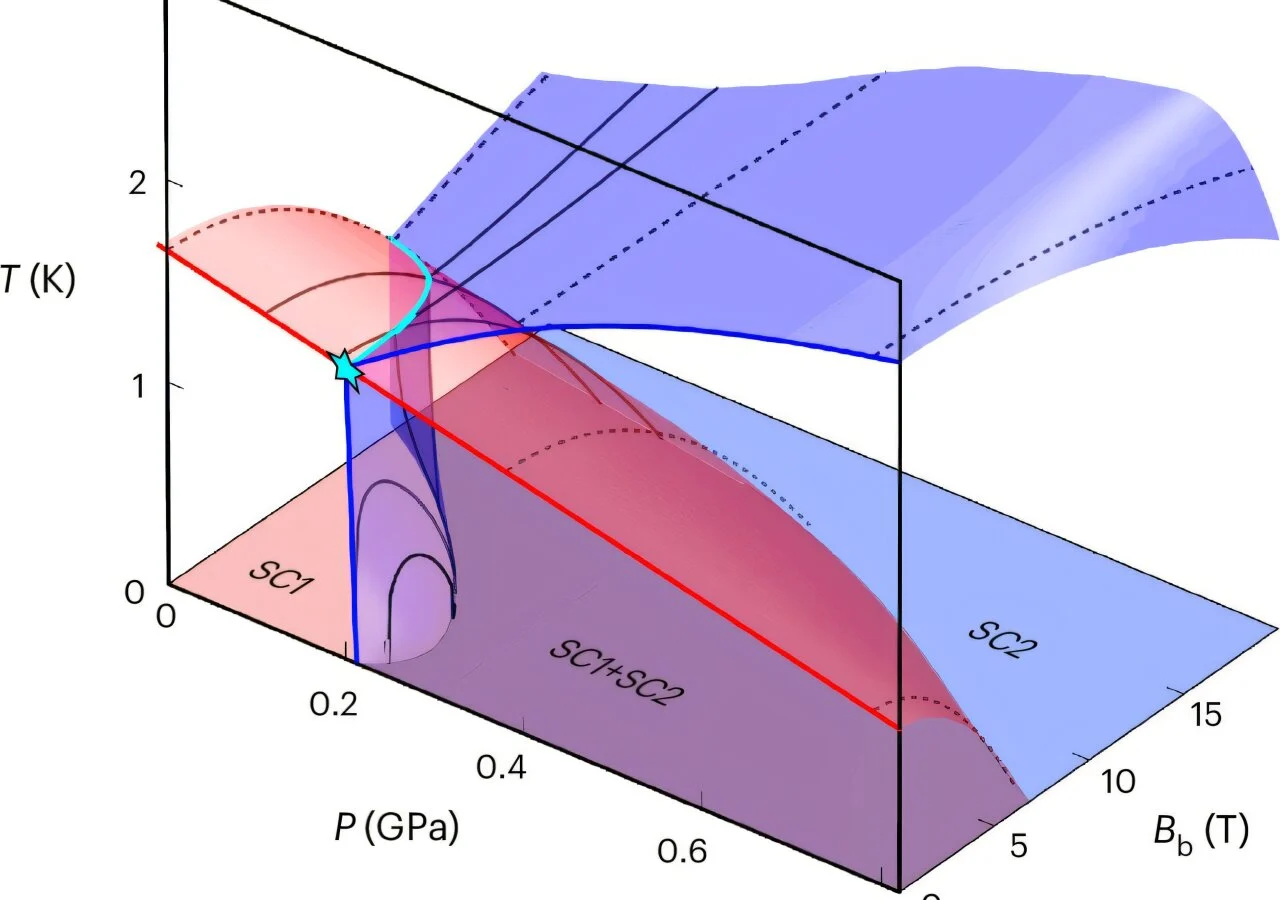
New phase diagram mapping
Researchers redrew the phase diagram for uranium ditelluride to show where superconductivity appears. The map tracks changes based on temperature, pressure, and magnetic field strength. This work corrects previous data regarding the material's behavior under extreme conditions.
Coexisting superconducting states
One form of superconductivity emerges when the material reaches extreme cold temperatures. A second type appears only within very strong magnetic fields or under squeezing pressure. Both flavors can exist simultaneously in this specific uranium compound.
Quantum computing potential
Scientists are searching for a topological superconductor to advance quantum computing technology. Uranium ditelluride now has the right ingredients to potentially become that material. Brad Ramshaw noted that no one had convincingly demonstrated such a superconductor before this study.
Reported by one outlet
Only one outlet has published this. Nothing here has been checked against a second report, so read it as that outlet's account and follow the link below for the original.
Reported by
1 independent outlet. Headline as published. Links open the original report.