CERN scientists find rare particle decay after four decades
Physicists at CERN announced on November 9, 2026, that they have found evidence of a beauty particle decay occurring once in roughly 10 billion events.
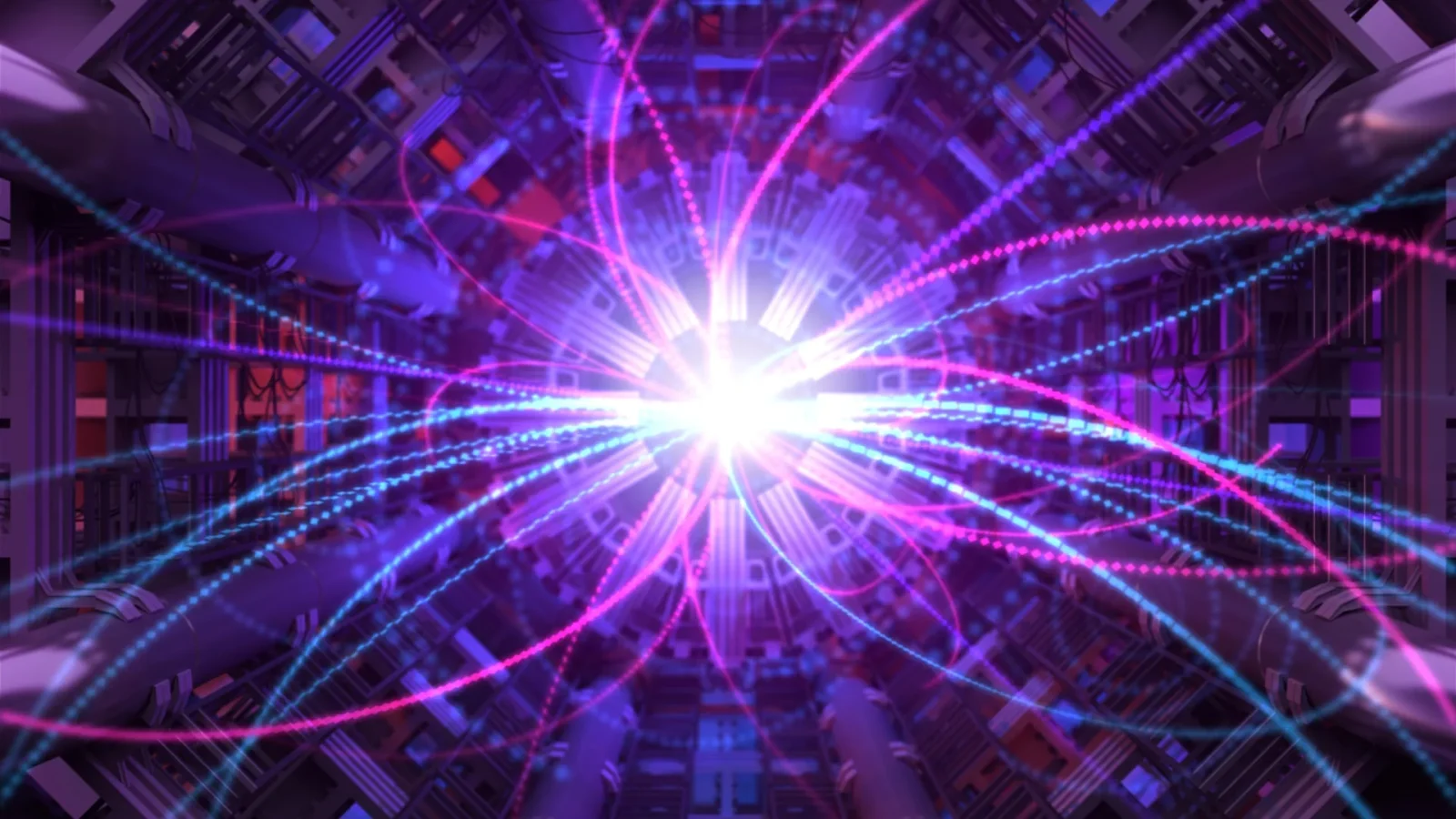
Rare decay confirmed by LHCb
Scientists collaborating on the LHCb experiment found proof of a phenomenon predicted to happen just once every roughly 10 billion beauty particle decays. During a seminar at CERN, this discovery represents the initial occasion where one study generated enough proof to confirm such an exceptionally uncommon occurrence. This finding involves a particle named Bd that holds both a beauty quark and an anti-down quark. Researchers discovered proof that this particle breaks down into two muons.
Detector upgrade enabled the breakthrough
Researchers managed to detect this rare occurrence despite its extreme rarity thanks to a major upgrade for the LHCb experiment. After a significant upgrade, the experiment started gathering data in 2024 at five times the speed recorded from 2010 through 2018. The upgraded detector also became better at identifying these specific signals from background noise. Previously, analyses incorporating data collected through 2018 could not confirm earlier evidence for this decay.
Results match Standard Model
Findings align with forecasts made by the Standard Model, which stands as the primary framework explaining basic particles and how they interact. This agreement helps narrow the possibilities for new particles beyond current theoretical frameworks. Physicists are interested because quantum effects allow other particles to influence how these decays occur. Although some particles are too massive for the Large Hadron Collider to create, they might still leave faint marks within the frequencies of those operations.
Reported by one outlet
Only one outlet has published this. Nothing here has been checked against a second report, so read it as that outlet's account and follow the link below for the original.
Reported by
1 independent outlet. Headline as published. Links open the original report.