CERN physicists simulate cosmic ray showers using oxygen and proton collisions
A team of physicists at CERN in Switzerland published new findings on how cosmic rays form after colliding oxygen atoms with protons.
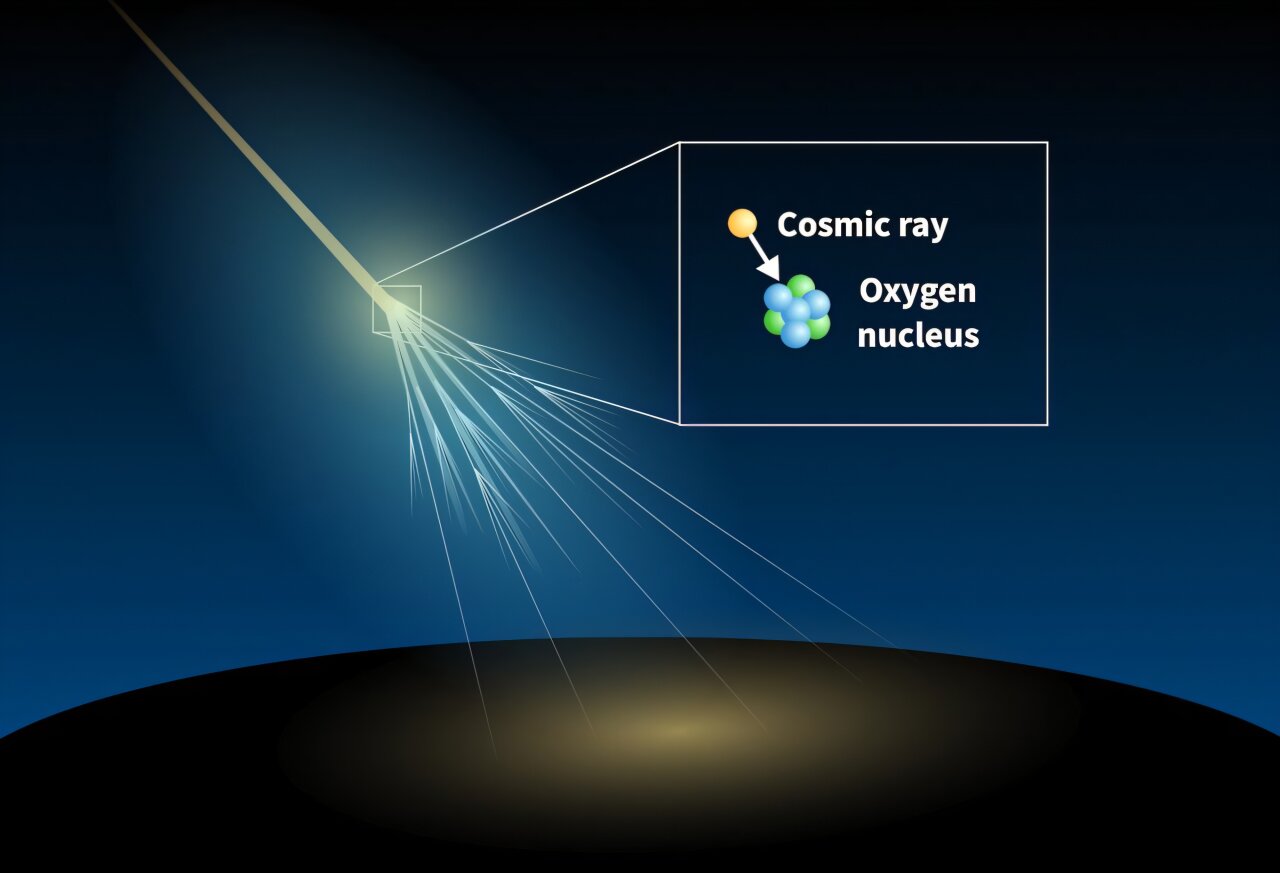
Laboratory simulation of atmospheric events
Scientists used the Large Hadron Collider to create conditions similar to those high in Earth's atmosphere. They achieved this by smashing oxygen atoms together with protons inside the machine. This approach allows researchers to study particle showers without looking up at the sky.
Historical context for cosmic rays
Physicist Victor Hess discovered these rays in hot-air balloons during the early 20th century. His instruments showed radiation levels rising as he ascended several kilometers above the ground. He later received the 1936 Nobel Prize in physics for identifying the space origin of this radiation.
New matter found in radiation
Later experiments revealed that cosmic radiation contains new kinds of matter called antimatter. The current study builds on over a century of research into these particle showers. Results from the oxygen collision experiment have now been published in Physical Review Letters.
Reported by one outlet
Only one outlet has published this. Nothing here has been checked against a second report, so read it as that outlet's account and follow the link below for the original.
Reported by
1 independent outlet. Headline as published. Links open the original report.