Canadian researchers outline early numeracy skills for children
Members of the Assessment and Instruction for Mathematics Collective in Canada explain how adults can foster foundational numeracy skills like counting and patterning.
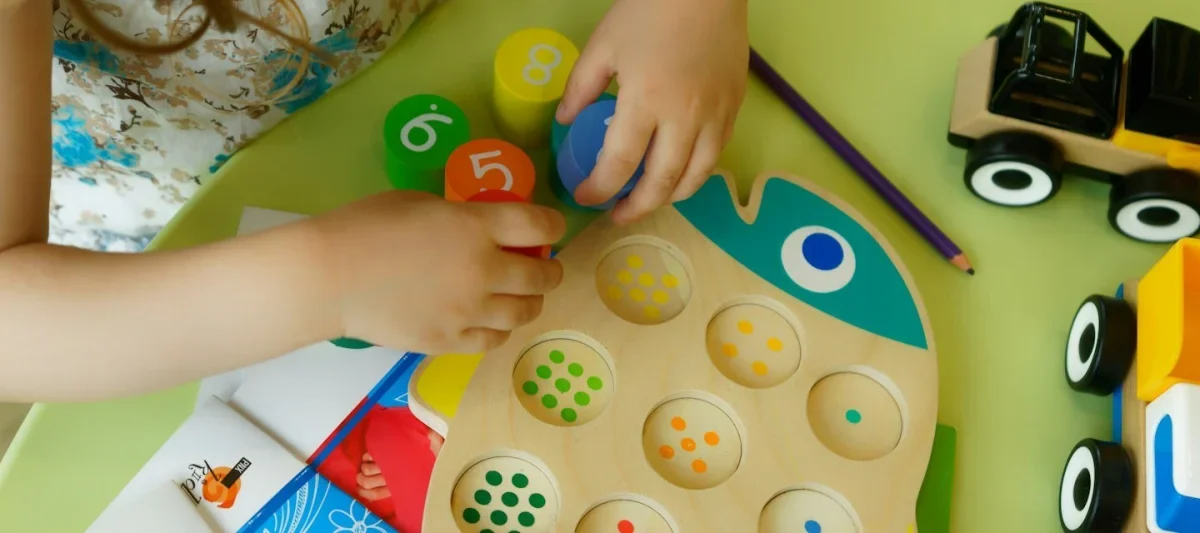
Counting links words to quantities
Adults often assume children understand numbers after they recite the count sequence. However, a child who recites numbers up to five may still grab a handful of crackers instead of exactly five. Young learners need practice matching numerals with images of objects arranged in varied ways. Games like Tiny Polka Dots require matching a card with the numeral three to images of three polka dots.
Patterning shows number relations
Children must also learn the relations between number symbols themselves to use numbers with ease. Researchers found kindergartners were quicker at recognizing that 1, 2, 3 are in order than 2, 4, 6. A group of kids claimed that 2, 4, and 6 were out of order since they do not follow one another in the counting sequence. Arranging various sequences on a number line helps kids grasp these relationships more effectively.
Order applies beyond numbers
Kids may learn to arrange items by size or sequence happenings. Songs such as Five Little Ducks alongside titles like The Very Hungry Caterpillar provide excellent methods for practicing counting sequences. While following the count sequence is vital, it does not fully enable young learners to build numeracy abilities. Success in later schooling, college work and careers is linked to basic abilities such as counting.
Reported by one outlet
Only one outlet has published this. Nothing here has been checked against a second report, so read it as that outlet's account and follow the link below for the original.
Reported by
1 independent outlet. Headline as published. Links open the original report.