Bacteria evolve new antibiotic weapons through gene swapping and selection
Researchers at the Max Planck Institute for Terrestrial Microbiology report that bacteria create new drug candidates by exchanging large gene segments.
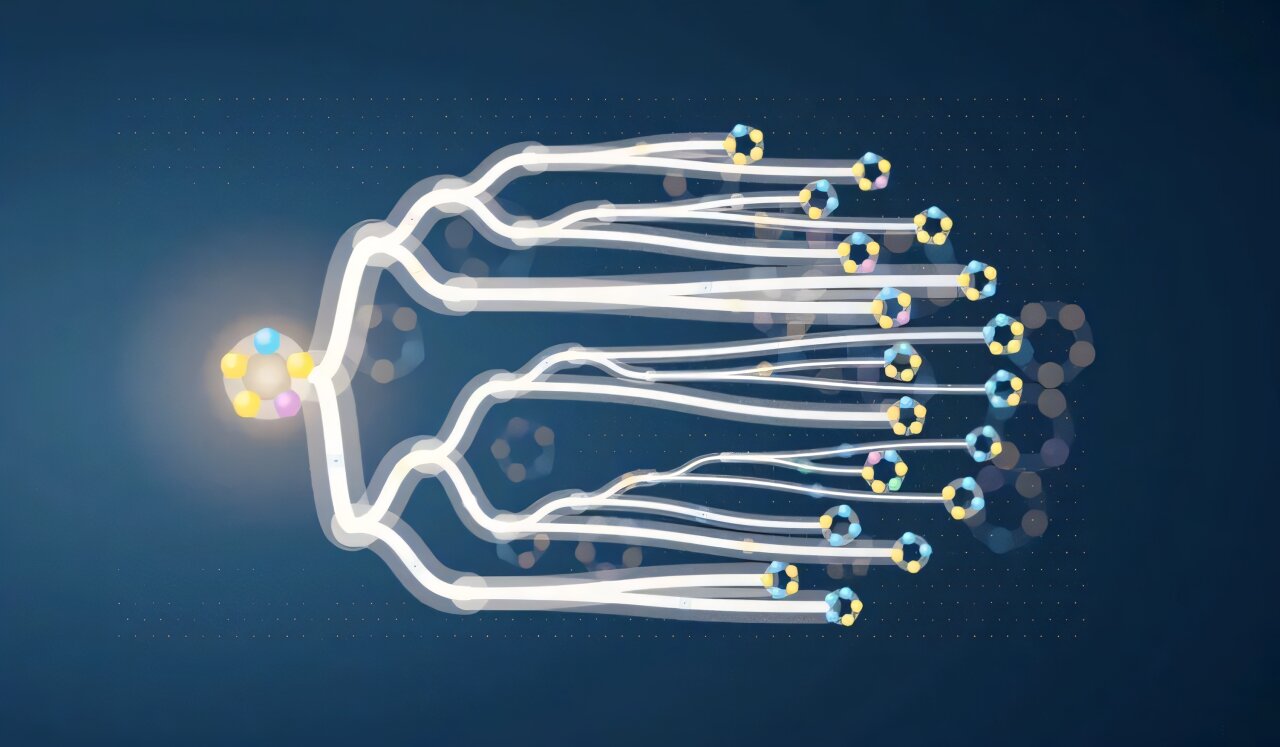
Unique evolution mechanism for peptides
Most potent antibiotics come from a class of compounds called nonribosomal peptides. These molecules are built by enzyme machineries that act like molecular assembly lines. Unlike ordinary proteins, these systems swap entire gene blocks instead of just changing single DNA letters.
New drug candidates emerge
This process creates fresh combinations of modules which alter the chemical properties of the final product. The finished molecules serve as weapons in microbial competition and are optimized for human medicine. A team led by Helge Bode aims to engineer these systems at the genetic level.
Reported by one outlet
Only one outlet has published this. Nothing here has been checked against a second report, so read it as that outlet's account and follow the link below for the original.
Reported by
1 independent outlet. Headline as published. Links open the original report.