Australian bogong moth uses magnetic field for navigation
Researchers from Lund University and partners published a study in Nature showing that Australian bogong moths navigate using Earth's magnetic field alongside stars.
Moths combine star and magnetic tools
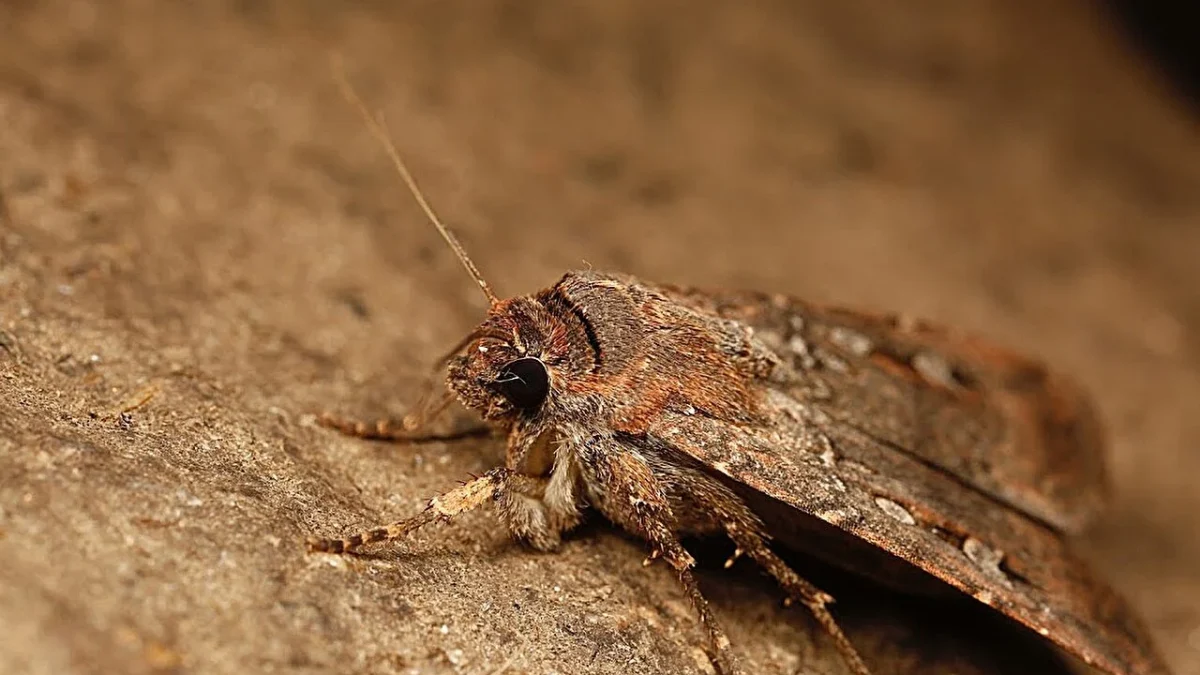
The Australian bogong moth, Agrotis infusa, travels more than 1,000 kilometers to reach caves in the Snowy Mountains. This journey happens every summer through pitch darkness without prior visits or guides. A new study published in Nature confirms the insect uses two independent navigation tools simultaneously. The first tool relies on stars of the Milky Way for direction finding at night. The second tool detects the magnetic inclination angle between Earth's field and the ground surface.
Ancient mechanisms shared by birds and insects
Eric Warrant, professor of zoology at Lund University, notes that different animal groups use the same basic principle to detect the magnetic field. This similarity suggests ancient biophysical mechanisms have been conserved through evolution despite separate evolutionary paths for 700 million years. Hui Chen from Lund University states that insects and birds appear to use similar biological solutions for navigation. Pauline Fleischmann from Carl von Ossietzky University Oldenburg adds that migratory animals likely use the magnetic field differently than nonmigratory ones.
Study reveals multiple magnetoreception types
The bogong moth's magnetic compass works differently from the polarity-sensitive sense found in desert ants. This research represents the most comprehensive investigation of magnetic sense importance for navigation in an invertebrate species. Researchers hope these findings will improve understanding of how animals use Earth's invisible field over long distances. The next step involves detailing how this mechanism interacts with other senses during animal navigation.
Reported by one outlet
Only one outlet has published this. Nothing here has been checked against a second report, so read it as that outlet's account and follow the link below for the original.
Reported by
1 independent outlet. Headline as published. Links open the original report.