Archaeologists identify Mesoamerican merchant rings from A.D. 900
A new study published in Ancient Mesoamerica suggests copper rings depicting trade gods identified long-distance merchants across western Mexico and Central America around A.D. 900.
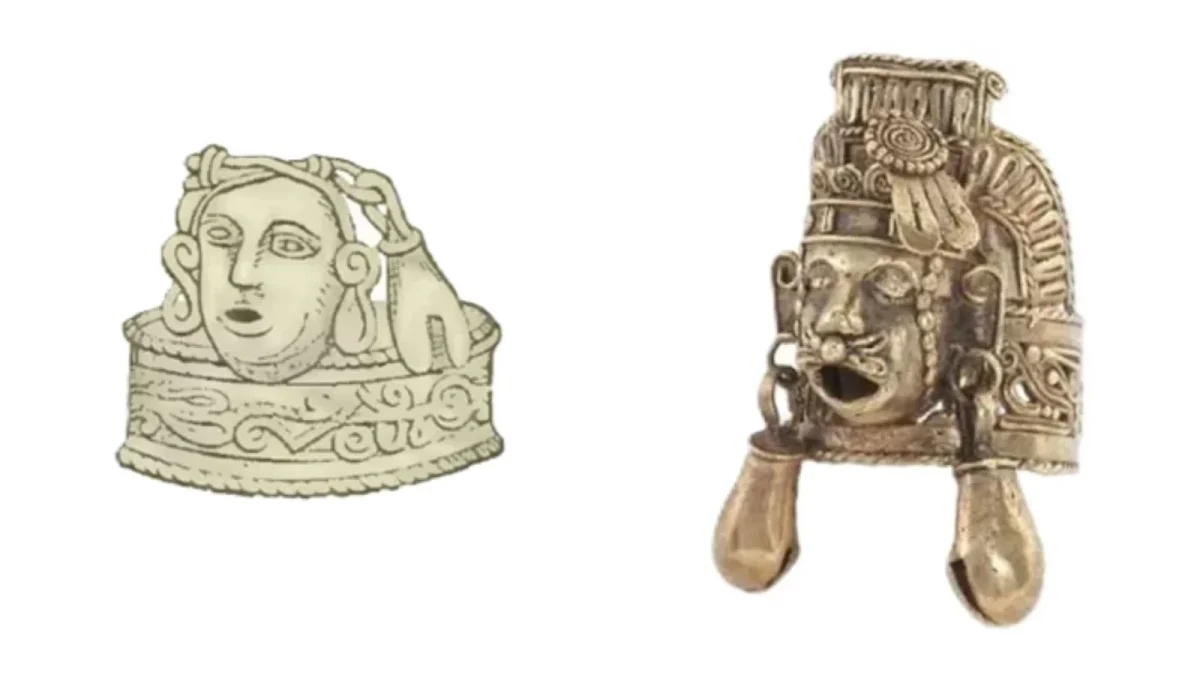
Study links rings to traders
Archaeologist Laura Solar-Valverde from El Colegio de Michoacán gathered over a thousand years of data to analyze these artifacts. Her research indicates the rings served as specific identifiers for real people rather than abstract agents in trade networks. The findings appear in the journal Ancient Mesoamerica and challenge previous views on these historical figures. Solar-Valverde stated that traders can no longer be viewed merely as carriers of exotic goods without personal identity.
Rings show god with long nose
The copper rings typically measured between 0.7 and 1 inch in diameter and fit adult fingers. Most artifacts displayed a human face featuring a long Pinocchio-like nose and a two-lobed feathered headdress. Scientists determined that this picture depicts Yacatecuhtli or Ek Chuah, deities associated with commerce in both Aztec and Maya cultures. Excavations found these rings in Hidalgo, Belize, Guatemala, and El Salvador alongside metal objects like bells and needles.
Traders relied on foreign alliances
Solar-Valverde noted that goods transported across vast terrain required strong alliances with people in foreign lands. These relationships were essential for traders to achieve goals and often survive dangerous journeys through rugged territory. The widespread distribution of the rings suggests they acknowledged the wearer's role as a traveling merchant. This evidence pushes back against the long-held assumption that western Mexico was a peripheral backwater region.
Reported by one outlet
Only one outlet has published this. Nothing here has been checked against a second report, so read it as that outlet's account and follow the link below for the original.
Reported by
1 independent outlet. Headline as published. Links open the original report.