Antarctic plants show opposite survival strategies under seven years of warming
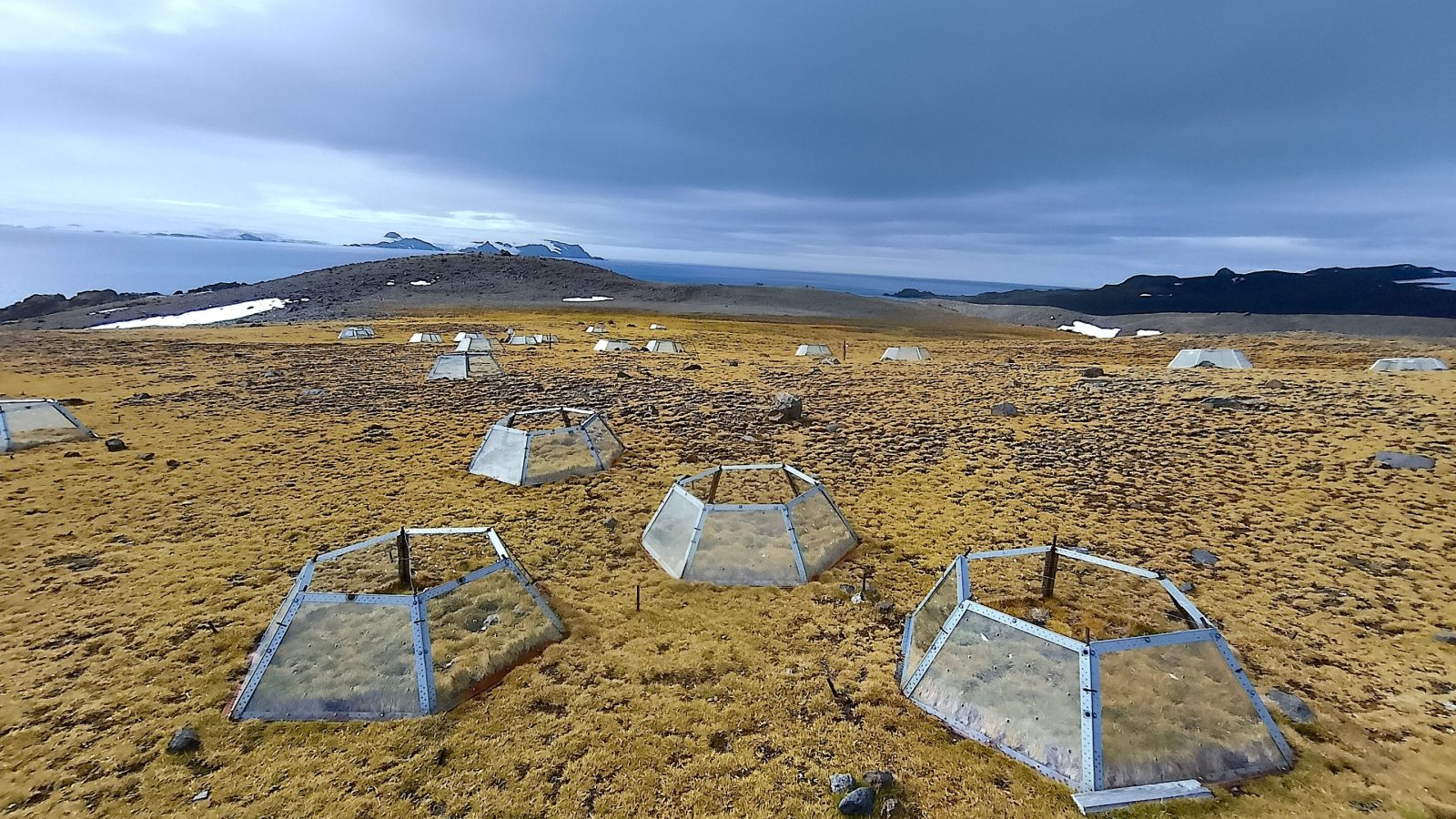
A team of Chilean and Spanish researchers published results from a seven-year passive warming experiment on the Antarctic continent's two native flowering plants in the journal Physiologia Plantarum.
Hairgrass adopts conservative water use
Deschampsia antarctica reduced its leaf hydraulic conductivity and photosynthetic rate after seven years of exposure to warming chambers. The authors interpret these changes as a strategy to conserve water under the new conditions.
Pearlwort increases transport capacity
Colobanthus quitensis responded by increasing its hydraulic conductivity, photosynthetic capacity, and cell-wall elasticity during the same period. These physiological shifts were supported by changes in vascular anatomy and its cushion growth form.
Contrasting responses to heat
The study found that both species developed different physiological responses to the identical warming scenario. One plant became more conservative while the other increased its transport functions to handle the heat.
Reported by one outlet
Only one outlet has published this. Nothing here has been checked against a second report, so read it as that outlet's account and follow the link below for the original.
Reported by
1 independent outlet. Headline as published. Links open the original report.