Antarctic ozone hole reaches largest size in decades
Measurements from the Copernicus Sentinel-5P satellite indicate the Antarctic ozone hole expanded to cover 27.3 million sq km as of September 20, 2026.
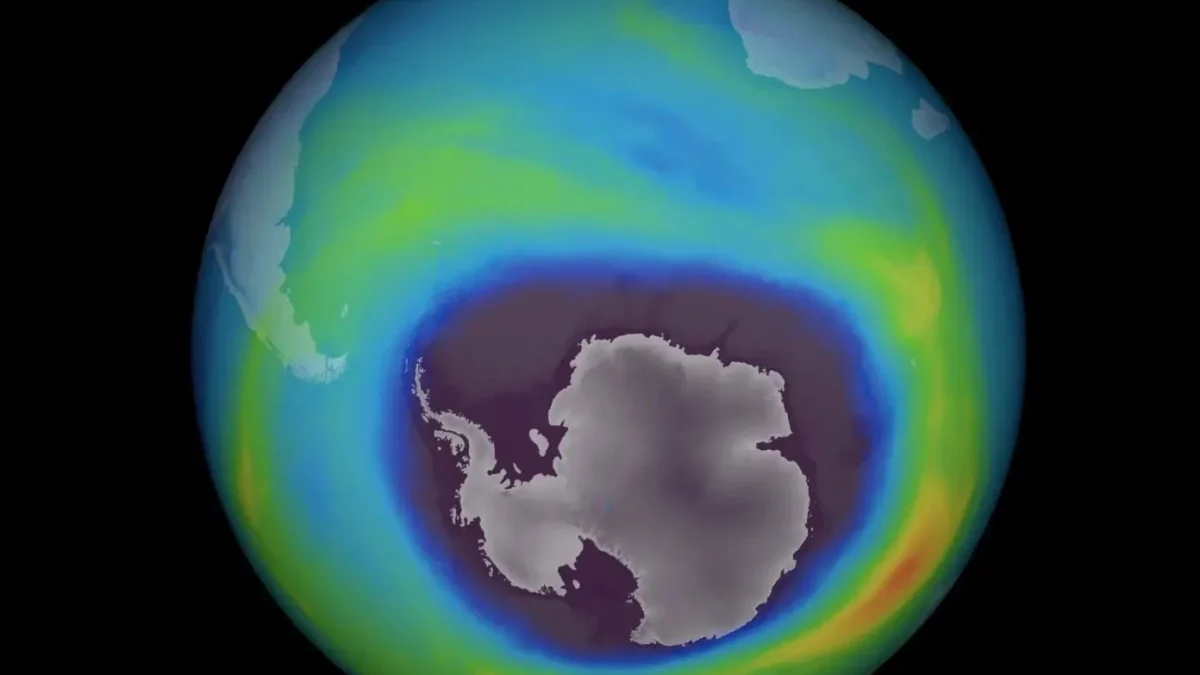
Satellite data reveals large extent
The ozone hole formed in August and grew throughout September before reaching its maximum size between mid-September and mid-October. By September 20, 2026, the area measured 27.3 million sq km, which is far larger than the continent of Antarctica itself. This measurement represents approximately 6.5 million sq km above the average recorded for this time over the last twenty years. The hole ranks as one of the largest observed in forty-eight years based on long-term atmospheric observations.
Strong vortex drove expansion
An unusually strong and persistent polar vortex kept stratospheric temperatures favorable for ozone depletion for a longer duration than usual. This specific atmospheric condition allowed the hole to expand beyond its typical extent despite natural yearly variations. Scientists note that while the area is large, the depth of depletion remained close to average levels seen in other years. The size of the hole tells only part of the story regarding overall ozone layer health.
Monitoring confirms recovery trend
The Copernicus Sentinel-5P satellite launched in October 2017 and carries a multispectral imaging spectrometer called Tropomi for precise gas detection. This instrument tracks unique fingerprints of atmospheric gases to monitor pollutants and stratospheric ozone with high spatial resolution. Regular observations help scientists distinguish natural fluctuations from longer-term trends following the global phaseout of ozone-depleting substances. The Montreal Protocol remains effective as evidence shows the layer continues to recover despite annual variations.
Reported by one outlet
Only one outlet has published this. Nothing here has been checked against a second report, so read it as that outlet's account and follow the link below for the original.
Reported by
1 independent outlet. Headline as published. Links open the original report.