Ancient lake site in Saudi Arabia reveals human life 125000 years ago
Researchers at King Abdullah University of Science and Technology have uncovered a 125000-year-old lakeside site in southern Saudi Arabia that shows how early humans lived during a greener period.
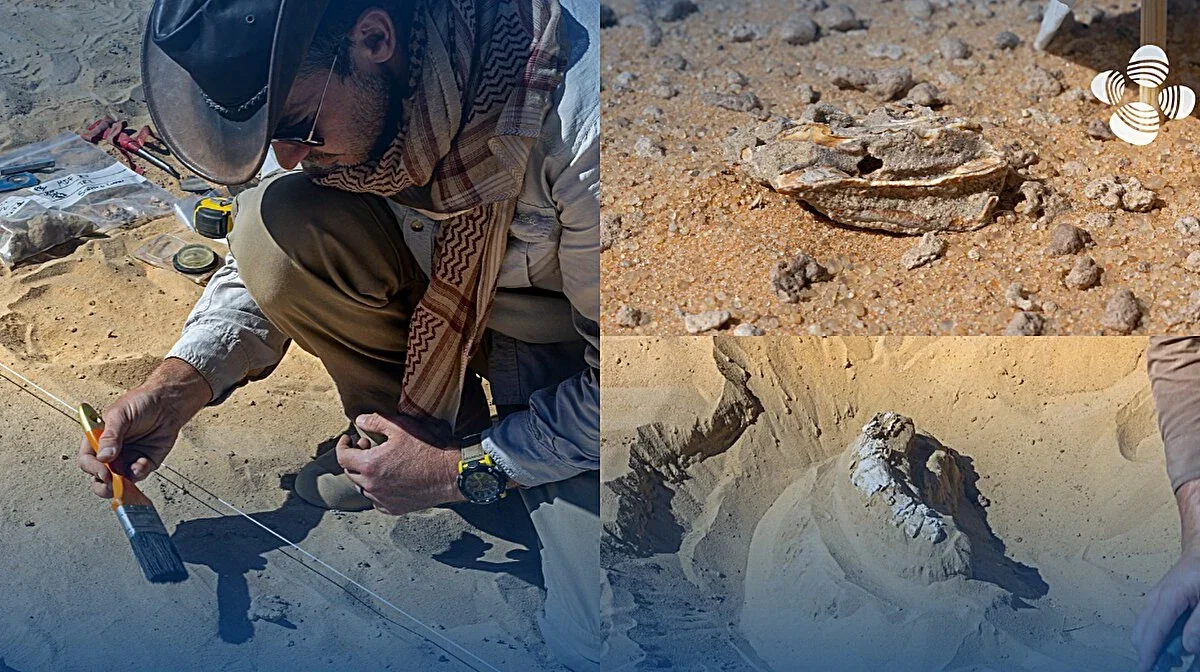
Mapping the ancient landscape
Scientists used satellite terrain modeling to map an ancient lake covering approximately 340 square kilometers. This body of water reached a maximum depth of 29 meters and was surrounded by vegetation. Systematic grid surveys collected fossils and stone tools from more than 130 locations across the site. Two dating methods confirmed the age of sand and fossil teeth found in the sediment layers.
Diverse resources and tools
The team documented over 500 fossil specimens of plants and animals including hippos and extinct buffaloes. Researchers collected 5511 stone tools larger than 2 centimeters from the main study area. More than 98 percent of these tools were made of flint using Levallois techniques. Analyses showed residues of toxic plants on tool surfaces suggesting varied uses for food and hunting.
Complete picture of daily life
Finding all elements together in a single dated context allows reconstruction of daily lives at the lakeside. Signs indicate that poisonous substances from flora may have been utilized for hunting purposes. Such findings include some of the oldest palm plant remains discovered within this area. These results provide substantial proof of Saudi Arabia's extensive human and environmental past.
Reported by one outlet
Only one outlet has published this. Nothing here has been checked against a second report, so read it as that outlet's account and follow the link below for the original.
Reported by
1 independent outlet. Headline as published. Links open the original report.