UCLA researchers add lids to nanovials for cell studies
A UCLA team published a study in Science Advances describing how they capped nanovials to enable longer experiments with cells and bacteria.
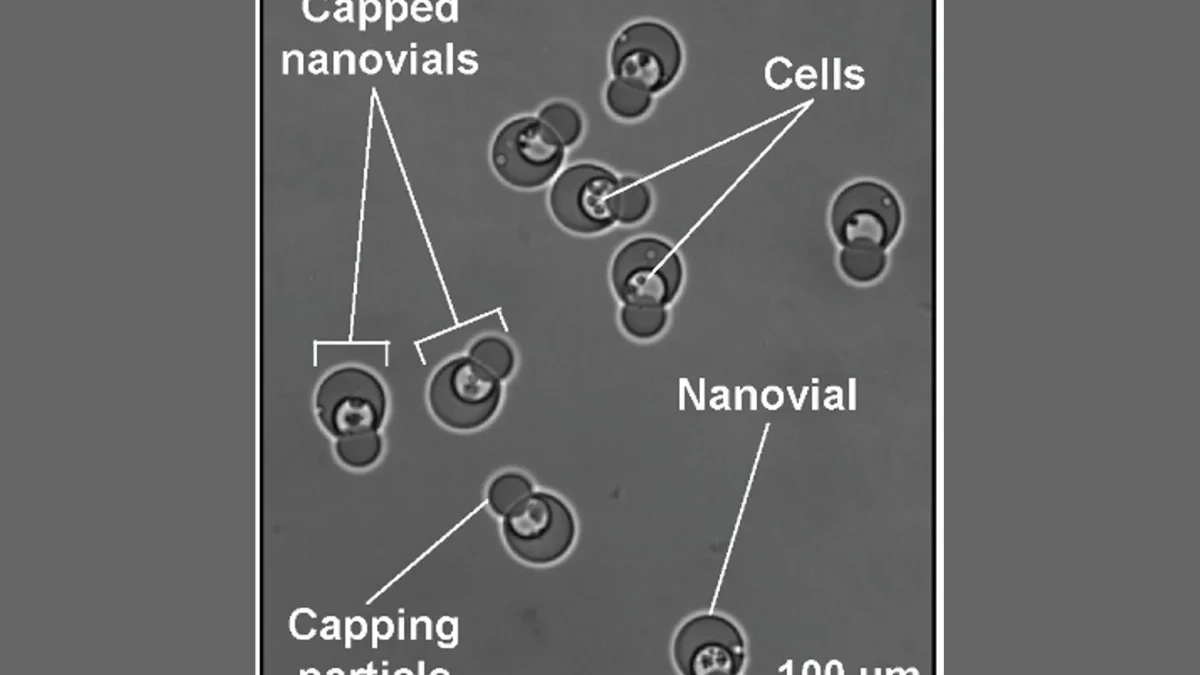
New caps trap cells longer
Researchers at the UCLA Samueli School of Engineering developed a system that places tiny hydrogel spheres over bowl-shaped particles. This modification allows cells to remain inside the nanovials for extended periods instead of escaping quickly. The new setup supports growing small colonies and observing how different cells interact under controlled conditions. A study published in Science Advances demonstrated that these capped devices can collect and sort difficult bacteria and yeast.
Molecular Velcro links parts
The connection between the bowl and the cap relies on two molecules that bond together like molecular Velcro. Investigators decorated the rim with vitamin B7 while placing a specific bacterial protein around the cap edge. Caps and nanovials spun in the same solution using a centrifuge allowed them to settle into place naturally. After optimizing this self-assembly process, as many as nine out of ten nanovials ended up capped successfully.
Porous design aids growth
The cap and nanovial both stay porous, allowing nutrients and waste to flow through easily while keeping cells contained within. Through this design, researchers can profile cellular interactions to verify that a single cell altered the behavior of another. The technology uses equipment already found in many biological research laboratories for analysis and sorting tasks. Uncapped versions were effective for mammalian cells but struggled with certain bacteria until this new capping system was introduced.
Reported by one outlet
Only one outlet has published this. Nothing here has been checked against a second report, so read it as that outlet's account and follow the link below for the original.
Reported by
1 independent outlet. Headline as published. Links open the original report.