Osaka researchers create polymer dots for imaging and cancer therapy
Professor Youhei Takeda and his team from the University of Osaka created a novel polymer material merging cell imaging with light-activated cancer therapy.
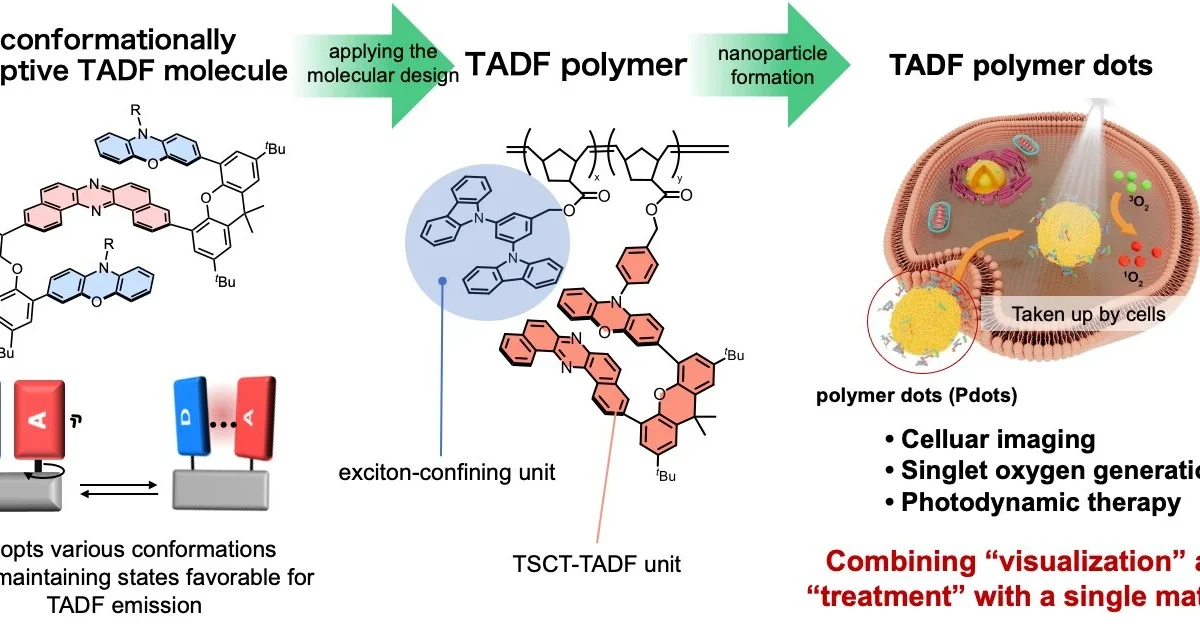
New material merges two functions
Professor Zachary M Hudson from the University of British Columbia in Canada worked with the research group. They formed the substance into nanoparticles called polymer dots that emit fluorescent light for imaging purposes. These structures also generate singlet oxygen to damage targeted cells when activated by suitable light irradiation conditions. The material uses thermally activated delayed fluorescence to produce orange light that lasts longer than natural background glow.
Design solves water stability issues
Lead author Nae Aota explained that maintaining properties in water is a major challenge for such designs. This specific polymer retained its orange emission and long-lived delayed fluorescence even with many light-emitting units packed together. The team utilized the JST-ASPIRE program to conduct research at the University of British Columbia and strengthen international collaboration. Electronic interactions occur between molecular groups stacked closely together rather than through chemical bonds linking them.
Lab tests show cell uptake
Experiments conducted in a laboratory showed that the polymer dots entered cells and gathered mainly within lysosomes. These compartments within cells are involved in processing and recycling cellular material for biological functions. The fluorescence enabled researchers to visualize the cells clearly during the experimental procedures described in the study. Future applications that connect imaging and therapy within one platform will benefit from this streamlined design method.
Reported by one outlet
Only one outlet has published this. Nothing here has been checked against a second report, so read it as that outlet's account and follow the link below for the original.
Reported by
1 independent outlet. Headline as published. Links open the original report.