KIMS researchers develop plasmonic coating for rapid sepsis diagnosis
A team from the Korea Institute of Materials Science has created a new plasmonic coating technology that detects low levels of bacteria within one hour.
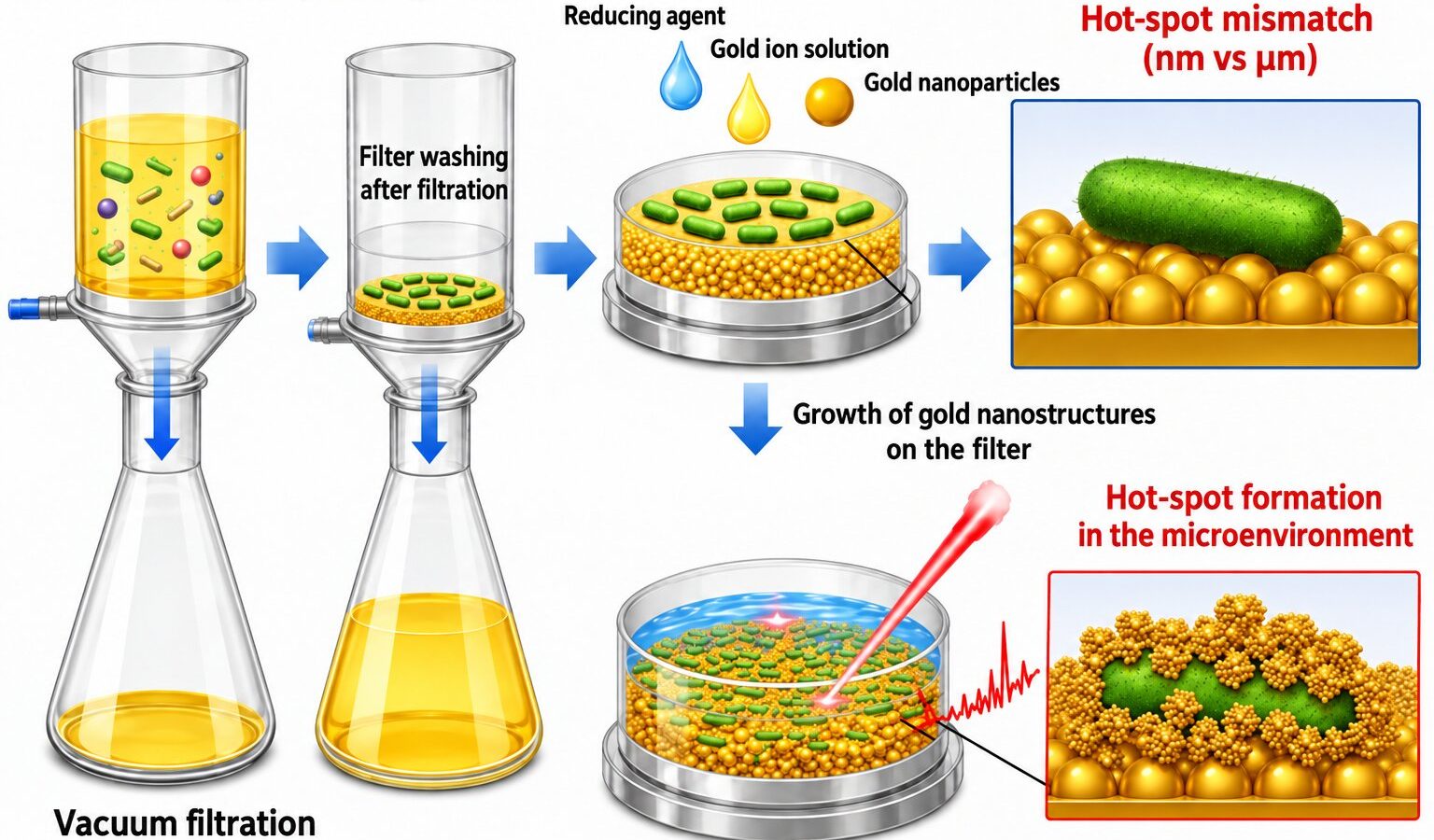
New detection method avoids culture steps
The research group led by Minyoung Lee and Sunggyu Park grew metal nanostructures directly on bacterial cells. This approach allows trace amounts of viable bacteria to be identified without traditional amplification methods. The process completes in one hour according to the study published in Small Methods.
Antibiotic response assessment takes two hours
The technology can also evaluate how bacteria respond to specific antibiotic treatments within a two-hour window. This capability supports more precise selection of drug regimens for severe infections. Sepsis diagnosis benefits from this rapid identification of the causative pathogen.
Early infection detection remains difficult
Bacterial concentrations in the bloodstream are extremely low during the early stages of an infection. Conventional blood culture testing struggles to find bacteria when numbers are this small. The new method addresses these limitations by detecting trace levels directly.
Reported by one outlet
Only one outlet has published this. Nothing here has been checked against a second report, so read it as that outlet's account and follow the link below for the original.
Reported by
1 independent outlet. Headline as published. Links open the original report.