Chlamydia bacteria pack DNA with lipids inside host cells
Scientists in Würzburg report that Chlamydia trachomatis uses lipids to compact its genetic material within human cells.
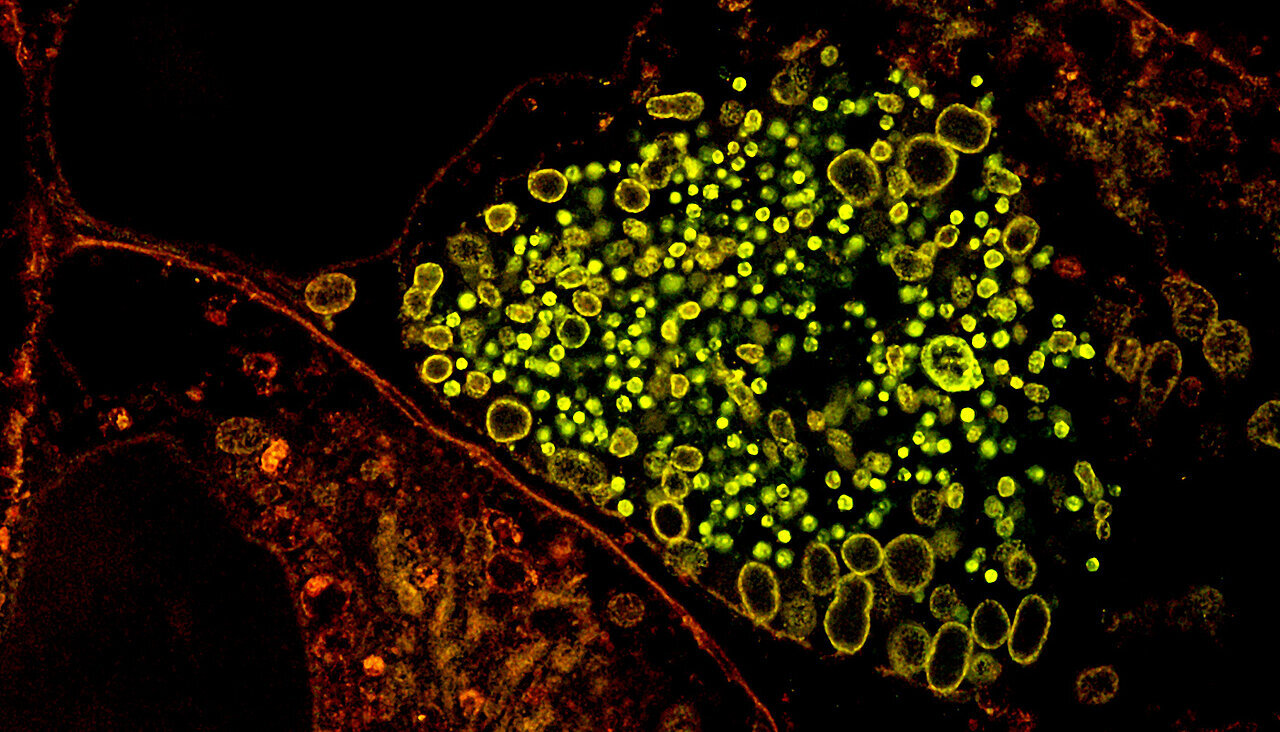
Specialized nutrient thief behavior
The bacterium Chlamydia trachomatis lacks the ability to reproduce on its own outside a living host. Researchers note that these pathogens hijack specific human metabolic products, particularly sphingolipids, to support their growth. They create a protected area inside the cell where colonies can become larger than the cell nucleus.
Microscopic size challenges
The infectious form of the bacteria measures between 200 and 300 nanometers in diameter. This tiny size falls below the resolution limit of standard light microscopes used for decades. Consequently, scientists previously mistook these organisms for viruses before better imaging techniques became available.
New structural insights
Recent findings from Würzburg reveal how the bacteria tightly pack their DNA into a nucleoid structure. This packing process involves lipids which might offer a new target for blocking infection. Understanding this mechanism helps explain how the pathogen survives its life cycle outside and inside cells.
Reported by one outlet
Only one outlet has published this. Nothing here has been checked against a second report, so read it as that outlet's account and follow the link below for the original.
Reported by
1 independent outlet. Headline as published. Links open the original report.