AOPDA warns failing sewers fuel global superbug crisis
The Asia & Oceania Post-Doctoral Academia issued a public health warning on Wednesday about deteriorating sewage infrastructure accelerating antimicrobial resistance during World AMR Awareness Week 2026.
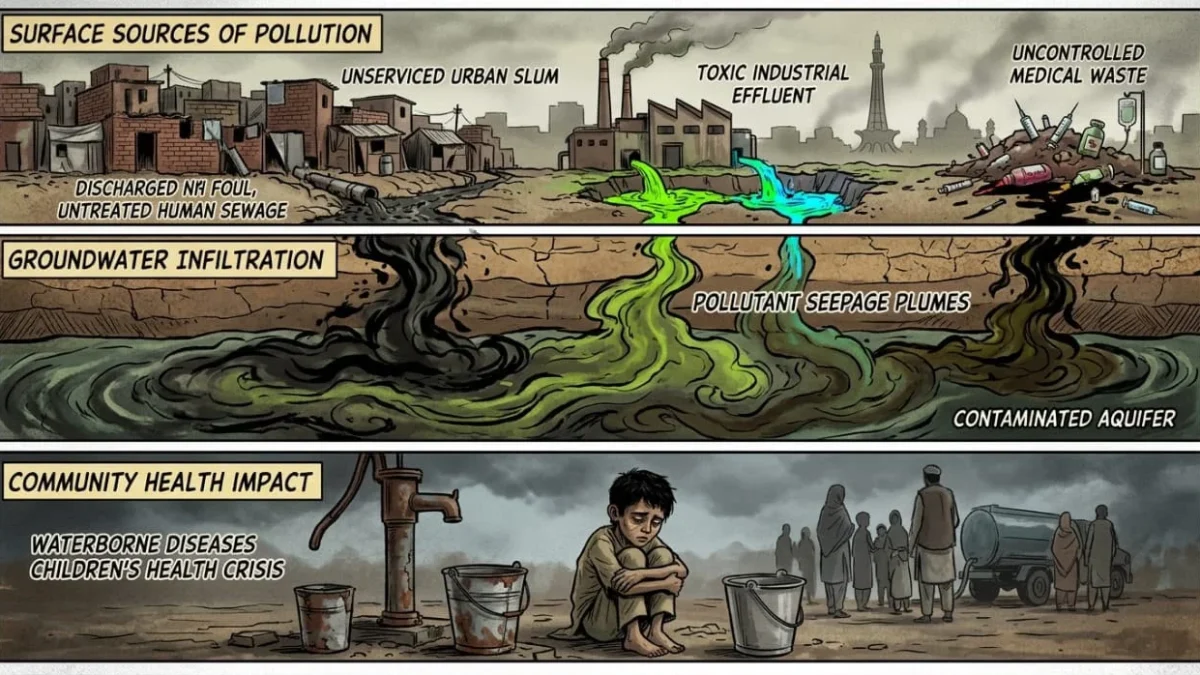
Untreated wastewater drives superbug spread
According to the Asia & Oceania Post-Doctoral Academia, unlined open drains and leaking sewer networks constitute a ticking toxic time bomb. This infrastructure accelerates antimicrobial resistance through polluted air and contaminated groundwater across rapidly urbanising regions. Reports indicate that over 80 percent of wastewater in Asia, Africa and Latin America is released without sufficient treatment. The assessment states that unprocessed sewage serves as a major yet ignored cause of worldwide superbug outbreaks.
Research links pollution to deadly outcomes
Prof Dr Aurangzeb Hafi built this warning on two decades of interdisciplinary research regarding ecologically incompatible sewage infrastructure. His assessment identifies a lethal tetragonal pollution system that simultaneously contaminates water, air, soil and the human body. An estimated 4.71 million deaths occur each year globally due to bacterial antimicrobial resistance, with almost 90 per cent of those cases affecting low income countries. Hydrogen sulphide and fine particles such as PM2.5 bioaerosols, which can transport drug-resistant microbes, are emitted from open sewage channels.
Groundwater contamination threatens millions of lives
The assessment's reported testing found Shiga toxin-producing Escherichia coli in over 97 per cent of the Lahore groundwater samples. These samples were collected at depths of 100 to 120 feet near deteriorating underground sewer networks. Heavy metals can sustain antibiotic resistance through genetic co selection potentially prolonging microbial contamination for future generations. The warning assumes particular significance as nearly 39 million lives could be claimed by 2050 if trends continue.
Reported by one outlet
Only one outlet has published this. Nothing here has been checked against a second report, so read it as that outlet's account and follow the link below for the original.
Reported by
1 independent outlet. Headline as published. Links open the original report.