Safety standards must be enforced for Indonesian ferries
The loss of the Virgo Transport 8 proves that relying on affordable sea routes is not an excuse for ignoring dangerous safety conditions.
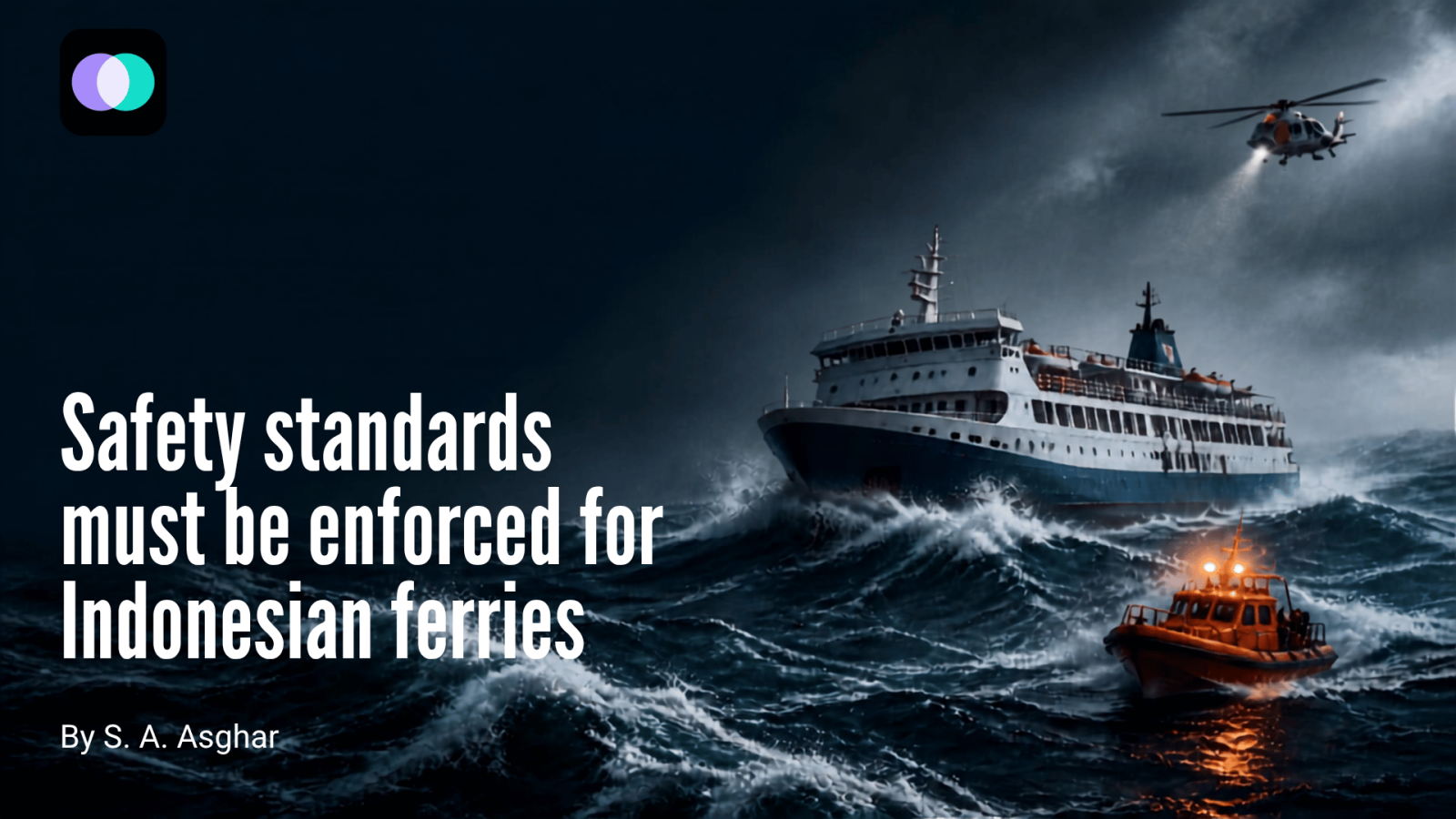
Indonesian rescuers are searching for 140 people after a ferry lost contact in the Java Sea. The vessel carried 243 passengers and crew before bad weather caused it to lose communication early on Sunday. One person died among those rescued while teams battled waves up to 2.5 metres high. Officials have not yet explained what happened to the ship or why it sank.
Many reports state that Indonesia relies heavily on ferries because sea routes are cheaper than air travel. This archipelago of 17,000 islands needs affordable transport for its residents to move between communities. The convenience of low cost often masks the reality of a relatively high accident rate in this sector.
Critics argue that the disaster proves Indonesian ferry safety regulations are insufficient given the frequent accidents. They point out that safety standards are not always rigorously enforced across the nation's waterways. This lack of enforcement allows dangerous conditions to persist despite known risks to human life.
Another view suggests that the incident reflects unavoidable risks inherent to sea travel in such a vast country. Proponents of this stance claim that accidents happen regardless of regulation because the environment is harsh. They argue that demanding perfect safety would make travel impossible for those who need it most.
This argument fails because it treats all accidents as equal and ignores preventable human error. The reporting explicitly states that safety standards are not always rigorously enforced resulting in a high accident rate. If risks were truly unavoidable, enforcement of existing rules would not be the primary variable causing these tragedies.
The fact that 103 people were evacuated while 140 remained missing shows that preparation was inadequate. Rescuers deployed ships and helicopters to reach the vessel but faced severe weather conditions alone. Without strict adherence to safety protocols, crews cannot expect to survive encounters with bad weather.
Indonesia must stop treating cost as a justification for neglecting basic maritime safety requirements. The government needs to audit every ferry operator to ensure they meet international standards before sailing. This action will protect passengers who currently rely on these vessels for their daily lives.
Regulatory bodies must impose harsher penalties on companies that ignore safety warnings or cut corners. A culture of compliance must replace the current acceptance of accidents as inevitable losses. Only by enforcing rigorous rules can Indonesia save its citizens from drowning in the Java Sea.